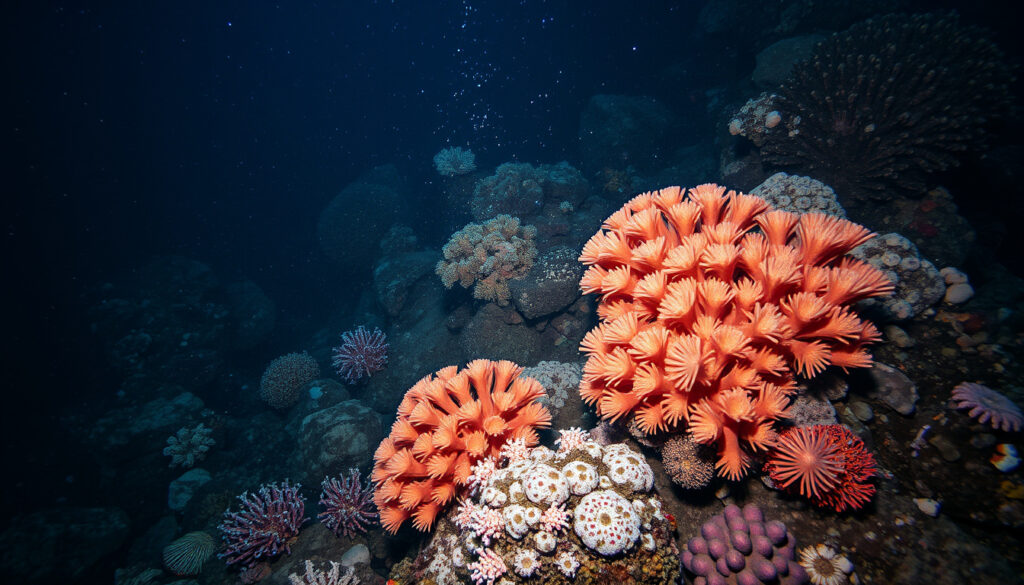
Coral Reef Guide: Ireland’s Cold-Water Reefs Explained
The world’s most overlooked coral reefs thrive in near-total darkness off Ireland’s west coast, and they are changing faster than scientists expected. These cold-water ecosystems, built by corals like Lophelia pertusa, hold clues about the future of reefs everywhere.
Ocean floor coverage: less than 1% ·
Marine species supported: 25% ·
Economic value per year: $375 billion ·
Reef-building coral species: over 800 ·
Fish species: 4,000
Quick snapshot
- Ireland’s cold-water reefs occur at depths of 200–1600 m in water 4–8 °C (National Parks & Wildlife Service – Ireland’s habitat authority).
- The main reef-building species are Lophelia pertusa and Madrepora oculata (NPWS).
- In 2026 the Marine Institute recorded the deepest known Irish coral, Solenosmilia variabilis, at 1600 m (Marine Institute – Ireland’s national marine research body).
- The exact age of many Irish cold-water reefs is still debated; estimates suggest around 4,500 years (Askaboutireland – Irish environmental education resource).
- How fast these reefs can recover from damage is not well understood. (Askaboutireland – Irish environmental education resource)
- Whether current speeds of 114 cm/s are the absolute highest ever recorded in a cold-water coral habitat remains uncertain (Silicon Republic – Irish technology news outlet).
- 2009: Over forty coral hills discovered off Porcupine Bank (Askaboutireland).
- 2015: Four new reefs found at ~800 m depth in Porcupine Bank (Marine Institute YouTube).
- 2022: UCC researchers recorded extreme currents of 114 cm/s in a coral canyon (Silicon Republic).
- 2026: Deepest Irish coral found at 1600 m (Marine Institute).
- Mapping of carbonate mounds on Rockall and Hatton Banks continues (NPWS).
- Research on ocean acidification’s impact on cold-water corals is intensifying. (NPWS)
- EU-funded projects aim to designate more protected areas for deep-water reefs. (NPWS)
Six key facts about coral reefs, one pattern: cold-water reefs are every bit as complex and vital as their tropical cousins, yet they operate in near-total darkness.
| Fact | Value | Source |
|---|---|---|
| Depth range of Irish cold-water reefs | 200–1600 m | NPWS |
| Water temperature | 4–8 °C | NPWS |
| Main reef-building species | Lophelia pertusa, Madrepora oculata | NPWS |
| Carbonate mound height | 300–500 m above sea floor | NPWS |
| Approximate age of Irish reefs | ~4,500 years | Askaboutireland |
| Number of coral hills discovered in 2009 | Over 40, up to 100 m high | Askaboutireland |
| Deepest Irish coral recorded (2026) | 1600 m | Marine Institute |
| Highest recorded current speed in a cold-water coral habitat | 114 cm/s | Silicon Republic |
| Ocean floor area covered by coral reefs (global) | Less than 1% | NPWS |
| Marine species supported by reefs (global) | 25% | NPWS |
What exactly is a coral reef?
Coral reefs are underwater ecosystems built by colonies of tiny animals called coral polyps. Each polyp secretes a hard skeleton of calcium carbonate, and over centuries these skeletons accumulate into massive structures. Reefs are among the most diverse ecosystems on Earth: they cover less than 1% of the ocean floor but support an estimated 25% of all marine species (NPWS – Ireland’s habitat authority).
There are two broad categories: warm-water reefs (found in tropical shallows) and cold-water reefs (found in deep, dark waters). Ireland’s cold-water reefs belong to the second group. They form on carbonate mounds — ancient seabed features that can rise 300–500 m above the surrounding sea floor (NPWS).
Cold-water corals can’t rely on sunlight for energy. Instead, they trap plankton and tiny food particles from the water column (Askaboutireland). That makes them entirely dependent on current patterns — a vulnerability as ocean currents shift due to climate change.
The implication: Ireland’s cold-water reefs are not a fringe curiosity but a core part of the global reef ecosystem. Their health mirrors that of tropical reefs, and their decline would mean a loss of biodiversity on a scale most people don’t realise.
Is a coral reef alive or dead?
A coral reef is a living ecosystem composed of thousands of individual polyps. When the polyps are healthy, the reef appears in vibrant colours and actively grows. When they die — often due to bleaching, disease, or pollution — the reef turns white, brittle, and becomes overgrown with algae (NPWS).
It’s common for a reef to be partially alive: some sections thrive while others die. Scientists monitoring Irish cold-water reefs track “live coral cover” — the percentage of the reef surface still occupied by living polyps. In 2015, a research cruise using the ROV Holland I discovered four previously unknown reefs in the Porcupine Bank region, all with significant live coral cover (Marine Institute YouTube).
A dead reef can look eerily beautiful — white and sculptural — but it’s functionally extinct as a habitat. The living polyps are what give the reef its ecological power.
The pattern: live coral is the engine of the reef. Dead coral is a skeleton that will eventually erode. For Irish cold-water reefs, maintaining live cover is particularly hard because growth is slow in cold, dark conditions.
Can you swim in the coral reef?
Swimming near coral reefs is common and often encouraged for tourism, but swimming on or touching the reef is a different matter. Touching coral can damage the delicate polyps and lead to death (Silicon Republic). Even fin kicks from snorkellers can break off pieces of living coral.
Can you touch a coral reef?
- No. The polyps are fragile and easily killed by human contact.
- Reef-safe sunscreen is recommended to prevent chemical harm (Silicon Republic).
- Some reefs are protected and prohibit swimming or touching entirely.
- Irish cold-water reefs are at depths of 200–1600 m, so swimming near them is not possible for recreational divers — only research submersibles can reach them.
The trade-off: accessibility. Tropical reefs are easy to visit and therefore vulnerable to mass tourism. Ireland’s deep-water reefs are inaccessible, which offers protection — but also makes them harder to study and monitor.
What is the biggest killer of coral reefs?
Climate change tops the list. Rising sea temperatures cause coral bleaching — a stress response where polyps expel the algae that live inside them, turning white and often dying. Ocean acidification, caused by increased CO₂ absorption, weakens the calcium carbonate skeletons that form the reef structure (NPWS).
Other major threats include pollution from agriculture and coastal development, overfishing (which disrupts the ecological balance), and disease outbreaks. The U.S. Environmental Protection Agency cites climate change as the primary global threat to reef ecosystems (NPWS).
Why this matters: Ireland’s cold-water reefs are not immune. Even at 1600 m depth, water temperatures are rising, and acidification is already measurable. A 2026 expedition by the Marine Institute found that the deepest known Irish coral, Solenosmilia variabilis, is normally seen between 1000 and 1300 m; its appearance at 1600 m may be a shift in response to changing conditions (Marine Institute – Ireland’s national marine research body).
Are there any coral reefs in Ireland?
Yes — and they’re far more extensive than most people realise. Ireland’s cold-water coral reefs occur mainly in deep waters off the west coast, between 200 and 1600 m depth. They are built primarily by the stony corals Lophelia pertusa and Madrepora oculata (NPWS).
These reefs are found on the continental shelf slope, on Rockall Bank, and on Hatton Bank. The carbonate mounds they live on can rise hundreds of metres above the sea floor, creating a dramatic underwater landscape. In 2009, a new deep-water coral province was discovered off the west coast (CORDIS – EU research information service).
How are Irish deep water coral reefs changing?
Recent research shows they are changing faster than previously thought. The 2022 discovery of current speeds up to 114 cm/s in the Porcupine Bank canyon — the highest ever recorded in a cold-water coral habitat — suggests that these reefs can survive in extreme conditions (Silicon Republic – Irish technology news outlet). But that same research also found that the corals are living at the edge of their tolerance.
The catch: Irish cold-water reefs are a barometer for global ocean health. If they change, it’s a sign that even the most remote, deep ecosystems are being affected by human activity.
Timeline: Key discoveries in Irish cold-water coral reefs
- 2009: Over forty coral hills discovered off Porcupine Bank, some up to 100 m high (Askaboutireland).
- 2009: A new deep-water coral province reported off the west coast (CORDIS).
- 2015: Four previously unknown reefs discovered at ~800 m depth in Porcupine Bank (Marine Institute YouTube).
- 2022: UCC researchers record extreme currents of 114 cm/s in a coral canyon (Silicon Republic).
- 2026: Deepest known Irish coral — Solenosmilia variabilis — found at 1600 m (Marine Institute).
Clarity check: Confirmed facts vs. what’s unclear
Confirmed facts
- Irish cold-water reefs exist at depths of 200–1600 m in water 4–8 °C (NPWS).
- Lophelia pertusa and Madrepora oculata are the main reef-builders (NPWS).
- Carbonate mounds can rise 300–500 m above the sea floor (NPWS).
- Current speeds up to 114 cm/s have been recorded in Porcupine Bank canyon (Silicon Republic).
- The deepest Irish coral recorded is at 1600 m (Marine Institute).
What’s unclear
- Exact age of Irish reefs — estimated at ~4,500 years but not precisely dated (Askaboutireland).
- Whether 114 cm/s is the absolute highest current speed ever recorded in a cold-water coral habitat (Silicon Republic).
- Recovery rates after disturbance — unknown for most Irish reefs.
- Full extent of coral coverage on Hatton Bank and Rockall Bank.
What experts say
“The discovery of Solenosmilia variabilis at 1600 m is the deepest known occurrence of this species in Irish waters, and it suggests that these corals can survive in conditions we didn’t think possible.”
— Marine Institute spokesperson, Marine Institute press release, 2026
“Cold-water corals don’t need sunlight. They trap food particles from the water, which means they are entirely dependent on ocean currents. A change in current patterns could starve them.”
— Askaboutireland marine education resource, Askaboutireland
“The Porcupine Bank canyon is the largest underwater canyon at the edge of Ireland’s continental shelf, and the currents there are extreme — the highest ever recorded in a cold-water coral habitat.”
— UCC researchers, quoted in Silicon Republic, 2022
For Irish policymakers, the implication is clear: protecting cold-water coral reefs means addressing climate change and ocean acidification at a national level, or risk losing an ecosystem that has taken thousands of years to build.
cityguidecanada.org, askaboutireland.ie, youtube.com, universitytimes.ie, transceltic.com, instagram.com
Frequently asked questions
What exactly is a coral reef?
An underwater ecosystem built by colonies of coral polyps that secrete calcium carbonate skeletons. They are among the most biodiverse habitats on Earth.
Are there any coral reefs in Ireland?
Yes, Ireland has extensive cold-water coral reefs at depths of 200–1600 m off the west coast, mainly built by Lophelia pertusa and Madrepora oculata.
Is a coral reef alive or dead?
A living reef has active polyps that give it colour and growth. Dead coral appears white and brittle, often overgrown with algae.
Can you swim in the coral reef?
Swimming near tropical reefs is common, but touching them damages the polyps. Ireland’s cold-water reefs are too deep for recreational swimming.
Can you touch a coral reef?
No. Touching coral can kill the polyps. Even sunscreen chemicals can harm them.
What is the biggest killer of coral reefs?
Climate change — rising sea temperatures and ocean acidification — is the primary global threat to coral reefs.
Is coral an animal?
Yes, coral polyps are animals. They belong to the phylum Cnidaria, related to jellyfish and sea anemones.
Can corals feel pain?
Corals have a simple nervous system but no brain or pain receptors. They react to stimuli but do not experience pain as humans do.
More related posts
 Malice at the Palace: NBA’s Worst Brawl Explained
 Trisha Yearwood: Long COVID, Weight Loss, Marriage & Career
 Manoj Bajpayee: Biography, Web Series, Net Worth & Personal Life
 Emily Deschanel: Health Rumors, Children, and Bones Legacy
 Alfred Hitchcock: Master of Suspense Biography & Films
 Conor McGregor Dick Pic: What Is Verified and What Is Not
 Minivan Rental at Canadian Tire Centre: Arena Guide
 Rajpal Yadav Net Worth, Biography & Financial Comeback (2025)