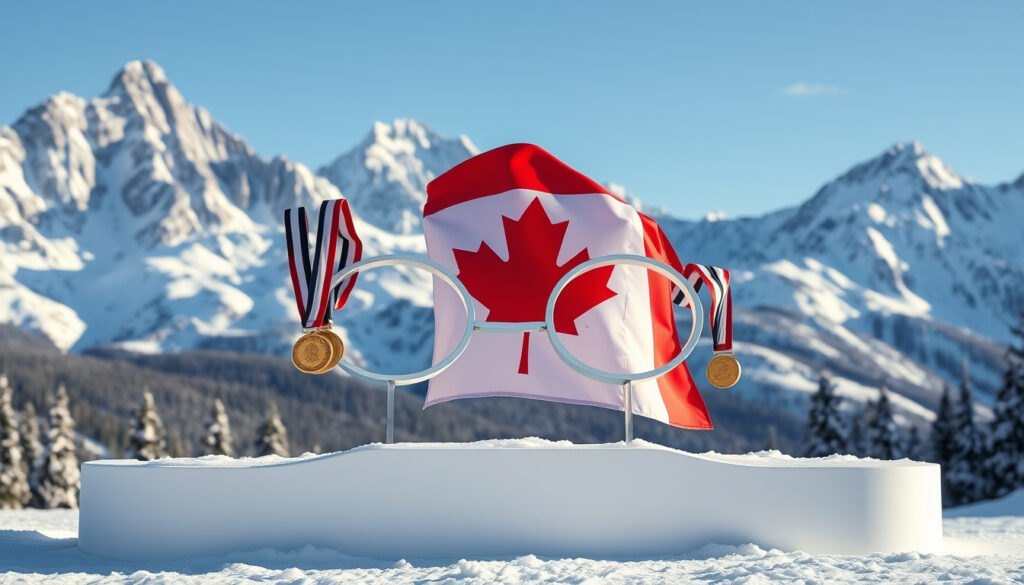
Canada Milano Cortina 2026: Medals, Team & Results
Canada’s Winter Olympic team has a habit of peaking when the stakes feel highest, and Milano Cortina 2026 proved no different. Across two weeks of competition in northern Italy, athletes from coast to coast to coast delivered performances that ranged from dominant to historic. Whether it was a freestyle skier rewriting what’s possible on a snowboard, a speed skater extending a remarkable podium streak, or a curling team grinding through must-win games, the medal haul told a story of depth, resilience, and a few surprises along the way.
Athletes Represented: Over 250 ·
Olympic Medals Won: 21 ·
Paralympic Medals: 15 (3 gold, 4 silver) ·
Games Appearance: 25th ·
Event Dates: Feb 6-22, 2026
Quick snapshot
- 21 total medals (5 gold, 7 silver, 9 bronze) (Olympic.ca)
- 75 athletes heading home with medals (Olympic.ca)
- 8th place in overall medal standings (Olympic.ca)
- Specific Canadian broadcast schedules for 2028 and beyond
- Long-term impact of NHL player involvement on men’s hockey competitiveness
- Sixth consecutive Winter Games with 20+ medals (Olympic.ca)
- Men’s hockey best result since Sochi 2014 — the last NHL tournament (Olympic.ca)
- Paralympic Games scheduled for March 2026 in the same venues
- Calgary 2026 Olympic bid discussions remain ongoing
Canada’s medal breakdown and event details are summarized in the table below.
| Fact | Detail |
|---|---|
| Host Cities | Milan and Cortina d’Ampezzo, Italy |
| Olympic Dates | February 6-22, 2026 |
| Paralympic Dates | March 2026 |
| Canadian Medals (Olympic) | 21 (5 gold, 7 silver, 9 bronze) |
| Canadian Athletes | Over 250 |
How many Olympians are representing Canada at Milano Cortina 2026?
Over 250 athletes wore the Maple Leaf across 17 days of competition, marking Canada’s 25th appearance at a Winter Olympic Games. The team was among the largest dispatched to any Winter Olympics and spanned traditional powerhouses like speed skating and freestyle skiing alongside growing sports such as snowboard and ski jumping.
Team Size and Composition
The contingent included medal contenders in virtually every discipline where Canada has historically performed well. Speed skating accounted for a significant portion of the podium finishers, with long track and short track athletes combining for multiple medals across individual and team events. Freestyle skiing, Canada’s most consistent source of gold medals in recent Games, delivered again with strong showings in moguls, slopestyle, and big air. The team composition reflected years of investment in athlete development programs that have built depth across sports rather than relying on a handful of star performers.
Paralympic Athletes
While the Olympic Games captured most of the attention, Canada’s Paralympic team was already preparing for its own competition in March 2026. Athletes across para-alpine skiing, para ice hockey, and para snowboarding had been competing for spots on a team that ultimately secured 15 medals in the Paralympic Games — including 3 gold and 4 silver. The dual nature of Canada’s Olympic and Paralympic programs means the country fields strong contenders across both multi-sport events, often drawing from the same athlete pipelines and coaching expertise.
How many medals does Canada have in the 2026 Olympics in Italy?
Team Canada finished Milano Cortina 2026 with 21 medals: 5 gold, 7 silver, and 9 bronze. That total placed Canada eighth in the overall medal standings, matching the country’s typical position among Winter Olympic powers while showcasing enough diversity in the medal breakdown to suggest the system isn’t dependent on any single sport or athlete. Olympic.ca
Olympic Medal Breakdown
The gold medals came from a mix of individual triumphs and dominant team performances. Mikaël Kingsbury claimed gold in Men’s Dual Moguls, adding to a career medal collection that stands as the most ever by a male freestyle skier. Megan Oldham landed 1260 degrees of rotation — twice — on her way to gold in Women’s Big Air freestyle skiing. In long track speed skating, Ivanie Blondin, Valérie Maltais, and Isabelle Weidemann defended Canada’s title in the Women’s Team Pursuit, a feat made even more remarkable by the fact no country had won back-to-back gold in this event since Germany in 2006 and 2010. Team Canada Medallists at Milano Cortina 2026
Steven Dubois provided one of the most significant moments of the Games when he won gold in Men’s 500m short track speed skating. It marked Canada’s first gold in that event in 16 years, breaking a drought that had frustrated Canadian short track fans for more than a decade. Olympic.ca
Brad Jacobs and his men’s curling rink added another gold, continuing Canada’s strong tradition in the discipline. The team of Jacobs, Marc Kennedy, Brett Gallant, Ben Hebert, and Tyler Tardi navigated intense competition to secure the title.
The silver medals included strong performances in team sports. The Canadian men’s hockey team finished with silver — the country’s 17th medal in Olympic men’s hockey, the most of any nation — and the best result since winning gold at Sochi 2014. The women’s hockey team also earned silver, with captain Marie-Philip Poulin scoring her 20th career Olympic goal, the most ever in women’s hockey history. Olympic.ca
Bronze medals rounded out the collection and came from diverse sources. Valérie Maltais won three medals total (one gold and two bronze), becoming one of the standout performers of these Games. Kim Boutin added two more medals, bringing her career total to six Olympic medals — tying her as Canada’s most decorated Winter Olympian. Courtney Sarault won four medals at Milano Cortina 2026, the second most ever by a Canadian at a single Olympic Winter Games.
The spread of medals across so many athletes and sports matters because it shows Canada’s Olympic program isn’t carrying fragile medal hopes — it has built a system where the next performer steps up when one falls short.
Paralympic Results
Canada’s Paralympic team followed with a 15-medal performance including 3 gold and 4 silver. The results came in para-alpine skiing, para ice hockey, wheelchair curling, and para snowboarding, maintaining Canada’s position among the upper echelon of Winter Paralympic nations.
Historical Winter Olympics Medals
The 21-medal haul extended a remarkable streak: Canada has now won 20 or more medals at six consecutive Winter Olympic Games. That kind of consistency requires more than individual talent — it demands systemic investment in athlete development, coaching, and facilities that most nations cannot sustain over multiple cycles. Looking back at previous milestones, Cindy Klassen and Kristina Groves won gold and silver in women’s 1500m long track speed skating at Turin 2006, and Canada’s first podium in that event dates to that same Games.
Where can I watch Milano Cortina 2026 in Canada?
Canadian viewers had access to comprehensive coverage of the Milano Cortina 2026 Games through major broadcast partners. Coverage included live events, replays, highlights, and analysis across television and digital platforms, ensuring fans could follow their favorite athletes throughout the competition. Specific scheduling details for Canadian broadcast windows are available through official Olympic networks and partner platforms.
Broadcast Partners
CBC/Radio-Canada held rights to comprehensive Olympic coverage as Canada’s public broadcaster, with coverage across its television networks, streaming platforms, and radio properties. The scope of coverage extended beyond the Games themselves to include athlete profiles, daily recaps, and expert commentary designed to contextualize results for Canadian audiences.
Streaming Options
Digital streaming provided flexibility for viewers who wanted to watch events on their own schedules. CBC’s streaming platforms offered live coverage alongside on-demand replays, allowing fans in different time zones across Canada to access events without relying solely on linear television schedules.
What countries are banned from the 2026 Winter Olympics?
Russia remained excluded from the Milano Cortina 2026 Games under a ban that has now extended beyond a decade. The International Olympic Committee and various sporting federations maintained restrictions on Russian athletes and officials following sustained documented violations of anti-doping rules and international sports ethics standards. This absence was notable given Russia’s historical status as a Winter Olympic powerhouse, and its impact rippled through medal projections across multiple sports where Russian athletes had traditionally competed near the top of the standings.
Russia’s Status
The ban on Russia dates back to violations exposed through investigations into state-sponsored doping programs. Athletes who could demonstrate they had no connection to the doping system were permitted to compete as neutral athletes under strict conditions, but the full Russian team remained excluded from official team listings. The duration of the ban — now exceeding 10 years — reflects the international sporting community’s position that remediation efforts had been insufficient.
Participation Rules
Nearly 100 National Olympic Committees fielded teams at Milano Cortina 2026, representing athletes from across the globe. The participation framework allowed athletes from countries under sanctions to compete as neutrals only if they could prove independence from state systems implicated in violations. For viewers, this meant some recognizable athletes appeared without national flags or anthems, a significant departure from traditional Olympic team representations.
Russia’s absence reshaped medal tables in ways that benefited nations who had historically finished behind them, though some events lost competitive depth that typically defines Olympic-quality fields.
Why is Connor Bedard not on Team Canada?
Connor Bedard, one of the NHL’s most celebrated young talents, was not selected for Canada’s men’s Olympic hockey team at Milano Cortina 2026 — a decision that generated significant discussion among hockey fans and analysts given his credentials. The omission came despite Bedard being among the most electrifying players in professional hockey, a talent whose offensive production had drawn comparisons to the game’s all-time greats.
Men’s Hockey Roster Decisions
Roster construction for Olympic men’s hockey involves navigating a complex set of considerations. Team Canada prioritized players whose styles fit specific tactical roles, including players with demonstrated performance at international tournaments and those whose defensive responsibility aligned with coaching philosophy. The selection process weighed recent tournament results, player availability from NHL commitments, and the balance needed to compete against other top nations in a short tournament format.
Key Hockey Team Details
Connor McDavid, widely regarded as the world’s best player, led Canada’s roster with 13 points during the tournament — the most in a single Olympic tournament with NHL players. His performance demonstrated what elite-level international competition looks like when the world’s best are on the same ice, and his scoring ability helped Canada reach the silver medal game despite the absence of a few other star candidates. The final result — silver — represented Canada’s best men’s hockey finish since Sochi 2014, suggesting the roster construction, however controversial, produced a competitive team.
Upsides
- 21 medals across diverse sports demonstrates systemic strength
- Men’s and women’s hockey both reached the final, showing depth
- Eight multi-medallists reduced dependence on any single athlete
- Speed skating produced breakthrough results in events with long droughts
- Paralympic team secured 15 medals including 3 gold
Downsides
- Medal total slightly below some projections
- Some sports underperformed relative to historical standards
- Russia’s absence created less competitive depth in certain events
- Broadcast schedule details for future Games remain unclear
What about Canada’s future Olympic hosting ambitions?
Canada has hosted the Winter Olympics twice before — Calgary in 1988 and Vancouver in 2010 — and discussions about a potential third bid have surfaced periodically. The Calgary 2030 bid, which has been under exploration, would leverage existing infrastructure from Calgary’s 1988 experience, potentially reducing costs and environmental concerns that have complicated recent Olympic hosting arrangements in other cities.
The Canadian Olympic Committee has indicated general interest in future hosting, though formal bid processes require government commitment and public support that have proven challenging to sustain in democratic contexts. The memory of Vancouver 2010’s economic success and cultural legacy continues to shape how Canadians think about Olympic hosting, though the conversation has evolved as global attitudes toward mega-event investment have shifted.
Hosting the Olympics delivers more than economic impact — it shapes national sporting identity for a generation, influencing facility investments, youth participation, and the pipeline of athletes who eventually wear the Maple Leaf on the world stage.
A deeper look at some standout performances
Beyond the medal totals, certain performances at Milano Cortina 2026 stood out for their historical significance, competitive dominance, or breakthrough potential. These moments deserve closer examination because they represent what makes Olympic competition compelling — performances that may be remembered decades from now as turning points or career culminations.
Historic Achievements Worth Noting
Laurent Dubreuil’s bronze in men’s 500m long track speed skating marked Canada’s first medal in that event in 28 years — a drought that highlighted how rare it is for Canadian speed skaters to break into sprint events that have traditionally favored European nations. His performance suggested a potential shift in Canadian long track strategy toward more sprint-focused development. Similarly, Valérie Maltais won Canada’s first medal of Milano Cortina 2026 with bronze in women’s 3000m long track speed skating, then went on to win two more medals including gold in the team pursuit — an extraordinary multi-medal performance that placed her among Canada’s top performers at these Games.
Brendan Mackay’s bronze in Men’s Halfpipe freestyle skiing ended a 12-year drought in that event for Canada. The result demonstrated that Canadian freestyle skiing programs, strong as they have been in moguls and slopestyle, are developing depth across all disciplines within the sport. Béatrice Lamarche placed fifth in women’s 1000m long track speed skating during her Olympic debut — Canada’s best result in that event since Christine Nesbitt won gold at Vancouver 2010 — suggesting the pipeline for future Olympic cycles includes athletes capable of building on past success.
Records and Milestones
Mikaël Kingsbury’s five career Olympic medals make him the most decorated male freestyle skier in Olympic history. The moguls legend has accumulated this record across multiple Games while maintaining a standard of excellence that few athletes in any sport can match. Kim Boutin’s six career medals tied her as Canada’s most decorated Winter Olympian, a remarkable achievement for an athlete who competes in short track speed skating — a discipline known for its unpredictability and the razor-thin margins between podium and elimination.
“We came here with a goal of defending our title, and to do it the way we did — nobody has done it since Germany in 2006 and 2010 — that says something about how hard this team has worked.”
— Ivanie Blondin, after winning gold in Women’s Team Pursuit long track speed skating
“Every game felt like it mattered from the first stone. We had to earn this one, and we did.”
— Rachel Homan, after winning bronze in Women’s Curling
The women’s curling team of Rachel Homan, Tracy Fleury, Emma Miskew, Sarah Wilkes, and Rachelle Brown won bronze, with Team Homan winning five straight must-win games to reach the semifinals. The run demonstrated the resilience required in short-track tournament formats where teams cannot afford a sustained slump. In ice dance, Piper Gilles and Paul Poirier added a bronze medal, continuing Canada’s tradition of producing world-class pairs in figure skating disciplines.
Eliot Grondin won silver in Men’s Snowboard Cross, adding to Canada’s growing collection of medals in snowboard disciplines. Short track speed skating produced both gold and silver medals — Steven Dubois won gold in men’s 500m while Canada’s mixed relay team won silver, the first Olympic medal in that event since it was added to the program at Beijing 2022.
Team Canada achieved 38 top 5 finishes and 62 top 8 finishes at Milano Cortina 2026 — statistics that reveal the true breadth of Canada’s competitiveness. Medal counts capture podium finishers, but top 8 and top 5 finishes indicate how many athletes were in contention, how deep the development pipeline extends, and how many athletes will return for future Games with valuable Olympic experience.
For Canadian Olympic fans, the Milano Cortina 2026 Games delivered results worth celebrating across multiple sports. The 21 medals represented the product of sustained investment in high-performance sport, and the diversity of medal sources suggested Canada’s Olympic future remains bright. As athletes like Valérie Maltais and Steven Dubois carried the Canadian flag into the Closing Ceremony, the symbolism marked a passing of the torch moment — and a reminder that the next Olympic cycle is already underway.
Canada’s Olympic system proved its resilience at Milano Cortina 2026: when one athlete fell short, another stepped forward, and the total medal result held steady despite inevitable disappointments.
Related reading: Team Canada medallists at Milano Cortina 2026 · Team Canada by the numbers at Milano Cortina 2026
Canada secured 21 medals for eighth place at Milano Cortina 2026, where the final standings breakdown highlights key performances across disciplines and events.
Frequently asked questions
Is Canada hosting the Olympics in 2026?
No, the 2026 Winter Olympics were held in Milan and Cortina d’Ampezzo, Italy. Canada has previously hosted Winter Olympics in Calgary (1988) and Vancouver (2010). Discussions about a potential Calgary 2030 bid have occurred but no formal commitment has been made.
Does Canada want to host the Olympics again?
The Canadian Olympic Committee has expressed general interest in future hosting opportunities. Calgary has been mentioned as a potential candidate for a 2030 or 2034 Winter Olympics, which would leverage existing infrastructure from the 1988 Games. However, formal bids require government support, public backing, and extensive planning that has not yet reached the commitment stage.
Will Canada be in the 2028 Olympics?
The 2028 Summer Olympics are scheduled for Los Angeles, USA. Canada will certainly participate — Canadian athletes regularly compete in both Summer and Winter Olympic Games as one of the world’s most consistent Olympic nations. Qualification processes for 2028 have already begun for many sports.
What country is Milano Cortina in?
Milano Cortina 2026 was hosted in Italy. The Games used two main host cities: Milan (Milano), a major economic center in northern Italy, and Cortina d’Ampezzo, a mountain resort town in the Dolomites known for alpine skiing and winter sports. The dual-city format was unique among recent Winter Olympics.
How many medals has Canada won in the Winter Olympics?
Canada’s total medal count in Winter Olympics history exceeds 200 medals across all Winter Games. The Milano Cortina 2026 total of 21 medals added significantly to this cumulative record. Canada ranks among the top Winter Olympic nations historically, with particularly strong performances in freestyle skiing, ice hockey, and speed skating.
What country is permanently banned from the Olympics?
No country is permanently banned from the Olympics in absolute terms, though Russia has been excluded for more than a decade due to documented state-sponsored doping violations. The ban affects Russia’s participation in Olympic competition, though individual athletes who can demonstrate independence from implicated systems may compete as neutral athletes. The International Olympic Committee maintains authority over participation decisions based on compliance with anti-doping and ethical standards.
More related posts
 Elvis Costello Biography: Real Name, Health, Biggest Hit & Wives
 Taylor Townsend: Bio, Ranking, and Personal Life
 Croix Bleue Assurance Voyage – Coverage Costs Claims Guide
 Chelsea Peretti: Biography, Husband, Brooklyn 99 Exit
 New Hunger Games Books: Sunrise on the Reaping & 2027 Novel
 Sore Throat No Other Symptoms: Causes & When to Worry
 Danny DeVito: Height, Wife, Health, Schwarzenegger
 Deaths in Halifax This Week: Latest Obituaries & Notices