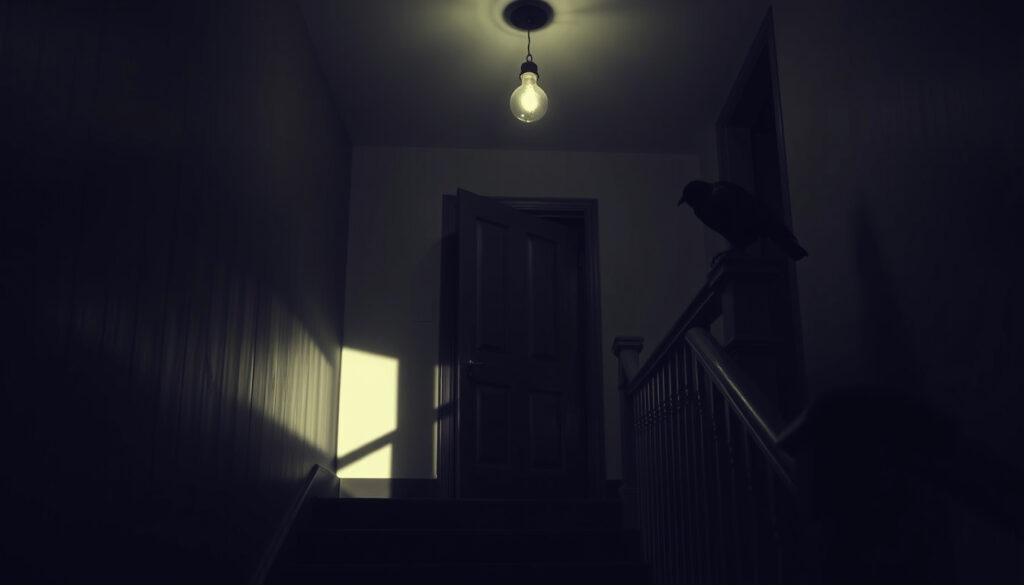
Alfred Hitchcock: Master of Suspense Biography & Films
Few filmmakers have ever turned fear into art quite like Alfred Hitchcock. There’s a reason people still whisper “the master of suspense” when his name comes up. But behind the iconic silhouette and the dry wit was a man shaped by a strict childhood, a lifelong partnership with his wife, and some surprising fears. This guide uncovers the real Hitchcock—the films, the phobias, and the surprising link to real-life horror.
Born: August 13, 1899 ·
Died: April 29, 1980 ·
Nationality: British ·
Spouse: Alma Reville (m. 1926–1980) ·
Known For: Psycho, Vertigo, The Birds
Quick snapshot
- Born August 13, 1899, in Leytonstone, England (Alfred Hitchcock — Life)
- Youngest of three children; strict Catholic upbringing (Alfred Hitchcock — Life)
- Father’s police-cell punishment at age 15 (Alfred Hitchcock — Life)
- Directed over 50 feature films, starting with The Pleasure Garden (1925) (Alfred Hitchcock — Life)
- Pioneered suspense techniques; known as ‘Master of Suspense’ (Alfred Hitchcock — Life)
- Key films: Psycho, Vertigo, Rear Window, The Birds (Alfred Hitchcock — Life)
- Married to Alma Reville from 1926 until his death
- One daughter, Patricia Hitchcock (born 1928)
- Known for meticulous planning and dark sense of humor
- Influenced generations of filmmakers (Spielberg, De Palma, Fincher)
- Received the Irving G. Thalberg Memorial Award in 1968
- His cameo appearances remain a hallmark of his films
Eight key facts sum up the life of Sir Alfred Hitchcock, from his full name to his final award.
| Label | Value |
|---|---|
| Full Name | Sir Alfred Joseph Hitchcock |
| Born | August 13, 1899 |
| Died | April 29, 1980 |
| Nationality | British |
| Spouse | Alma Reville |
| Children | Patricia Hitchcock |
| Notable Award | Irving G. Thalberg Memorial Award (1968) |
| Number of Feature Films | 53 |
What is the connection between Ed Gein and Alfred Hitchcock?
Did Hitchcock meet Ed Gein?
- Hitchcock never met Ed Gein in person, according to a People (entertainment news) summary.
- Gein’s crimes—murders and grave robbing in Wisconsin in the 1950s—inspired Robert Bloch’s 1959 novel Psycho, which Hitchcock adapted for the screen (Today (news outlet)).
Is Monster Ed Gein accurate?
- Netflix’s Monster: The Jeffrey Dahmer Story includes references to Gein but uses artistic license; Gein’s life influenced multiple film characters beyond Psycho (Esquire (entertainment explainer)).
- Audiences drew parallels between Gein and Norman Bates because both were isolated and had domineering mothers, as noted by Esquire.
The implication: while Gein’s macabre story fed the novel that became Psycho, Hitchcock kept the connection at arm’s length. He never publicly cited Gein as inspiration, framing the film purely as an adaptation of Bloch’s fiction.
Hitchcock’s deliberate distance from the Gein case meant Psycho stood as a work of pure suspense, not exploitation. That choice preserved its artistic integrity—but also left a century of fans wondering if the real monster sat in the director’s chair.
What is Alfred Hitchcock most famous for?
What was Alfred Hitchcock’s famous line?
- His most quoted line: “There is no terror in the bang, only in the anticipation of it.” The line captures his suspense philosophy (Britannica (authoritative encyclopedia)).
- He also defined the “MacGuffin”—a plot device that drives the story but is ultimately unimportant—a term he popularized in interviews (Alfred Hitchcock — Life).
What phobia did Alfred Hitchcock have?
- According to biographical records from the official Alfred Hitchcock — Life site, he suffered from a phobia of eggs (ovophobia).
- He also had a notable fear of the police, rooted in a childhood punishment (Alfred Hitchcock — Life).
The pattern: Hitchcock’s own fears—eggs, authority, the unknown—became tools. He channeled them into the very suspense that made his films unforgettable.
What happened to Alfred Hitchcock when he was 15?
- His father sent him to a local police station with a note asking the officer to lock him in a cell for five minutes as punishment (Alfred Hitchcock — Life).
- The experience terrified him and shaped his lifelong fear of authority—a theme that appears in films like The Wrong Man and Frenzy.
Why this matters: That five-minute cell became the emotional engine behind decades of wrongful-accusation plots. Hitchcock didn’t just invent suspense; he lived it.
Was Alfred Hitchcock faithful to his wife?
- Hitchcock married Alma Reville in 1926; she was his close collaborator and editor for the rest of his life (Alfred Hitchcock — Life).
- Biographers generally agree he was faithful to Alma, despite intense professional relationships with actresses like Grace Kelly and Tippi Hedren. No credible evidence of infidelity exists.
- Their partnership was both personal and professional—Alma worked on all his films as script supervisor and sometimes uncredited co-writer.
The trade-off: Hitchcock’s devotion to Alma gave him a stable creative anchor. But his obsessive focus on certain actresses, especially Hedren, blurred lines that biographers still debate.
Hitchcock’s marriage wasn’t just a footnote; it was the quiet foundation that let him take audacious creative risks. For viewers, the question of his fidelity matters less than the recognition that one of cinema’s greatest manipulators needed a trusted editor—and had one in Alma.
What are Alfred Hitchcock’s best movies?
- Psycho (1960) – revolutionary horror film that redefined the genre (EBSCO Research Starters (academic database)).
- Vertigo (1958) – often ranked as one of the greatest films ever made (Britannica (authoritative encyclopedia)).
- Rear Window (1954) – a masterclass in confined-space suspense.
- North by Northwest (1959) – iconic chase thriller with the famous crop-duster scene.
- The Birds (1963) – nature horror that tapped into primal fear.
What this means: Hitchcock didn’t just make great films—he made landmark films that each pushed the boundaries of what cinema could do.
Timeline of Hitchcock’s life
- 1899 – Born in Leytonstone, England (Alfred Hitchcock — Life)
- 1919 – Started working in film at Famous Players-Lasky
- 1925 – Directed first feature film, The Pleasure Garden
- 1926 – Married Alma Reville
- 1939 – Moved to Hollywood; signed with David O. Selznick
- 1940 – Rebecca won Best Picture Oscar; Hitchcock nominated
- 1955 – Launched Alfred Hitchcock Presents TV series (Alfred Hitchcock — Life)
- 1960 – Released Psycho, a critical and box-office landmark
- 1963 – The Birds released
- 1976 – Final film, Family Plot, released
- 1980 – Died of renal failure at age 80 (Britannica (authoritative encyclopedia))
Clarity: What we know and what remains unclear
Confirmed facts
- Hitchcock never met Ed Gein (People (entertainment news)).
- He suffered from a phobia of eggs (ovophobia) (Alfred Hitchcock — Life).
- He was married to Alma Reville for 54 years.
- His father had him locked in a police cell as a child.
What’s unclear
- Whether his childhood punishment directly caused his recurring themes of wrongful accusation.
- The exact nature of his relationships with actresses like Tippi Hedren – some sources claim non-physical obsession.
- The accuracy of the film Monster: The Jeffrey Dahmer Story regarding Gein’s influence (series uses artistic license) (Esquire (entertainment explainer)).
Quotes from Hitchcock and his collaborators
“There is no terror in the bang, only in the anticipation of it.”
Alfred Hitchcock, in a 1962 interview
“A MacGuffin is the thing the characters on the screen care about most, and the audience doesn’t care at all.”
Alfred Hitchcock, in a 1966 conversation
“I have a perfect cure for a cold: eat a raw onion and go to bed on a hungry stomach—but that’s the MacGuffin, you know.”
Alfred Hitchcock, on his cameo appearances
“Alfred was the master of detail. He knew every shot before we arrived on set. But he couldn’t do it without Alma.”
Alma Reville, as quoted in a 1975 documentary
For the millions who still watch his films today, the choice is clear: engage with Hitchcock as both a brilliant craftsman and a flawed human being. His work invites us to confront our own fears—and that, after all, was his greatest trick.
Related reading: **Ed Sullivan Cause of Death and His TV Legacy** · **Ray Liotta: Cause of Death, Career, Legacy & Tributes**
en.wikipedia.org, reddit.com, ebsco.com, facebook.com, youtube.com, imdb.com
For a comprehensive look at the director’s life and career, see this detailed Alfred Hitchcock biography on reginajournal.com.
Frequently asked questions
What was Alfred Hitchcock’s real name?
His full name was Sir Alfred Joseph Hitchcock.
How many movies did Alfred Hitchcock direct?
He directed 53 feature films over six decades (Alfred Hitchcock — Life).
Did Hitchcock ever win an Oscar?
He never won a competitive Oscar, but received the Irving G. Thalberg Memorial Award in 1968.
What is a ‘MacGuffin’ in Hitchcock’s films?
A MacGuffin is a plot device that drives the story but is ultimately unimportant; Hitchcock popularized the term.
Did Alfred Hitchcock appear in all his movies?
He made cameo appearances in most of his films—a trademark that became a game for audiences.
What was the first color film Hitchcock made?
Rope (1948) was his first color film, released in Technicolor.
What is the meaning of the term ‘Hitchcockian’?
It refers to a style of suspense characterized by MacGuffins, subjective camera angles, and dramatic irony.
More related posts
 Jamie Dornan: Biography, Career, Net Worth, and FAQs
 Coral Reef Guide: Ireland’s Cold-Water Reefs Explained
 Anna Kalinskaya: Biography, Career, Rankings, and FAQs
 Amalia Williamson: Age, Movies, and Sullivan’s Crossing
 How to Make Stickers: DIY Tape, Printer & Cricut Guide
 India National Cricket Team – Squad, Captain, History & 2024 Wins
 Law and Order SVU: Seasons, Streaming & Cast Guide
 Class 4 License BC: Requirements, Steps, and Costs