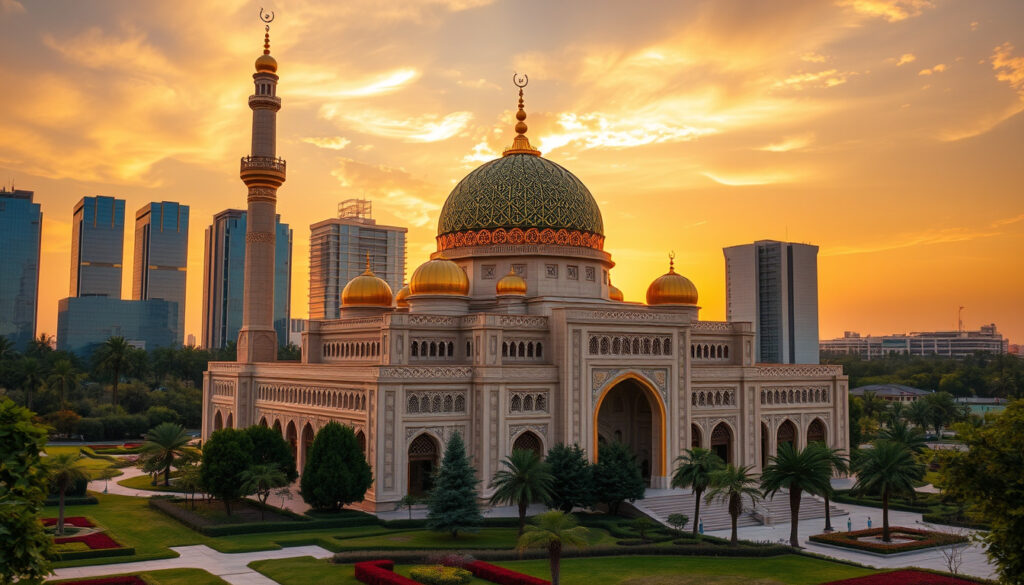
Aga Khan: Wealth, Religion, and Legacy of the Ismaili Imam
For tens of millions of Ismaili Muslims around the world, the name Aga Khan resonates as both a spiritual anchor and a force for development. Shah Karim al-Hussaini, the 49th hereditary Imam of Nizari Ismailis, spent nearly seven decades weaving together faith, business, and philanthropy into a global network, and this article explores how he built that legacy, where his wealth came from, and what made him a unique figure in modern Islam.
Followers: 12–15 million Ismaili Muslims worldwide · Net worth (estimated): $1–2 billion (various sources) · Imam since: 11 July 1957 · Lifespan: 13 December 1936 – 4 February 2025
Quick snapshot
- Shah Karim al-Hussaini was the 49th hereditary Imam of the Shia Ismaili Muslims (Aga Khan Museum (cultural heritage institution)).
- He founded the Aga Khan Development Network (AKDN), which operates in over 30 countries (AKDN (official development network)).
- His exact net worth is not publicly audited; estimates range from $1–2 billion (Wikipedia (user-contributed encyclopedia)).
- The full identity of the successor, Aga Khan V, has not been confirmed beyond Prince Rahim al-Hussaini (Aga Khan Museum (cultural heritage institution)).
- Imamate began 11 July 1957; the Aga Khan was just 20 years old when he succeeded his grandfather (Wikipedia (user-contributed encyclopedia)).
- Death on 4 February 2025 in Lisbon, Portugal, marked the end of a 67-year reign (Devex (development news outlet)).
- Prince Rahim Aga Khan V has been named as the 50th hereditary Imam and chair of AKDN (Aga Khan Museum (cultural heritage institution)).
- The Aga Khan Development Network continues its work across education, health, and culture globally. (Aga Khan Museum (cultural heritage institution))
Here are the key facts about the Aga Khan IV at a glance.
| Full Name | Shah Karim al-Hussaini |
|---|---|
| Title | Aga Khan IV |
| Born | 13 December 1936, Geneva, Switzerland |
| Died | 4 February 2025, Lisbon, Portugal |
| Imamate | 11 July 1957 – 4 February 2025 |
| Successor | Aga Khan V (named in will) |
How Did Aga Khan Get So Rich?
The Aga Khan’s wealth has long fascinated outsiders, but its sources are more structured than mysterious. A combination of inheritance, smart investments, and community contributions built an estimated fortune of $1–2 billion.
Why are Ismailis so wealthy?
The wealth of the Ismaili community, often attributed to a strong emphasis on education and entrepreneurship, is partly channeled through tithes to the Imamate. The Aga Khan’s personal fortune is distinct from community wealth, but both are intertwined in the development network.
What were his main sources of income?
- He inherited a substantial fortune and land holdings from his grandfather, Aga Khan III.
- He invested in horse breeding—his stud farm produced champion thoroughbreds—alongside aviation and real estate ventures.
- His personal investment portfolio grew through decades of business acumen, though specific holdings were never fully disclosed.
How did the Ismaili community contribute to his wealth?
Ismaili followers pay a voluntary tithe called dasond (or zakat), a portion of their income that supports the Imamate’s institutions and charitable activities. According to Devex (development news outlet), the Aga Khan channeled these funds through a faith-based but secular-institutional approach, reinvesting them into development projects that generated returns.
Critics question whether a spiritual leader should amass personal wealth while administering tithes. Supporters counter that the Aga Khan’s wealth funded a $1 billion annual development budget that reached 30+ countries (AKDN (official development network)).
The implication: The Aga Khan’s fortune was not a simple case of inherited riches—it was a self-reinforcing cycle of faith contributions, investment, and institutional philanthropy that made the Imamate a major development actor.
How Are Ismailis Different from Muslims?
Ismaili Islam is a branch of Shia Islam, but its distinctive features set it apart from both Sunni and mainstream Shia traditions.
Are Ismailis actually Muslims?
Yes, Ismailis are Muslims. They follow the Quran and the teachings of the Prophet Muhammad, but their interpretation is guided by a living Imam, which distinguishes them from other Muslim denominations.
| Feature | Ismaili Islam | Mainstream Sunni / Twelver Shia Islam |
|---|---|---|
| Leadership | Living Imam (currently Aga Khan V) as divine guide | No living Imam; authority rests in scholars and texts |
| Quran interpretation | Allegorical, guided by Imam | Literal and contextual, guided by scholars |
| Alcohol | Not universally forbidden; left to conscience | Generally forbidden (haram) |
Do Ismailis accept the Quran?
Yes, Ismailis revere the Quran as the word of Allah, but they interpret many passages allegorically rather than literally. This hermeneutic tradition is central to their theology, guided by the living Imam.
Can Ismailis have more than one wife?
The Aga Khan has not issued a universal prohibition on polygamy; however, it is rarely practiced among Ismaili communities today, and individual conscience is considered (Wikipedia (user-contributed encyclopedia)).
What is the role of the living Imam in Ismailism?
Unlike Sunni and Twelver Shia Muslims who believe the line of Imams ended centuries ago, Nizari Ismailis maintain that the Imam continues to be a divinely guided leader. The Aga Khan IV, as the 49th hereditary Imam, was considered the authoritative interpreter of faith for his community. As the Aga Khan Museum (cultural heritage institution) notes, he was both the spiritual and temporal guide for approximately 15 million Ismailis.
What this means: This living-imam doctrine creates a fundamental difference. Mainstream Muslims do not recognize living descendants as having religious authority, whereas Ismailis view their Imam as infallible in matters of faith.
Why Is Aga Khan So Famous?
The Aga Khan’s fame extends far beyond his religious role. He became a household name through a rare combination of spiritual leadership, staggering wealth, and high-profile philanthropy.
What is the Aga Khan Development Network?
Founded in 1967, the Aga Khan Development Network (AKDN) is one of the largest private development networks in the world. According to AKDN (official development network), it employs approximately 96,000 people, mostly in developing countries, and runs over 1,000 programmes and institutions across more than 30 countries. Its annual non-profit development budget is about $1 billion.
How did his philanthropy gain global recognition?
AKDN’s work spans health, education, culture, and economic development. The Aga Khan Foundation, established in 1967 by the Aga Khan himself, works in 17 countries on poverty, hunger, and illiteracy (Wikipedia (user-contributed encyclopedia)). The network built hospitals, universities (e.g., Aga Khan University in Karachi), and cultural centers like the Aga Khan Museum in Toronto. The Devex (development news outlet) obituary described him as a “trailblazer” for pioneering a faith-linked but secular-institutional development model.
The pattern: The Aga Khan’s fame is not just about wealth—it’s about the scale and reach of the institutions he built, which touch millions of lives regardless of faith.
Is Aga Khan a Royal Family?
The title “Aga Khan” has a royal ring to it, but the reality is more complex. It is not a political monarchy but a hereditary imamate with ceremonial royal connections.
Does the Aga Khan hold a hereditary title?
Yes, the title “Aga Khan” is hereditary within the family, but it denotes the Imamate of Nizari Ismailis, not a throne. The Shah of Iran granted the Aga Khan the title of “Prince” in a ceremonial capacity, but it carries no state authority.
What is the Aga Khan’s relationship with royal families?
The Aga Khan IV had close ties to European and Middle Eastern royalty. His mother was British (Joan Yarde-Buller, daughter of a baron), and he moved in elite circles. He was a direct descendant of the Prophet Muhammad through his daughter Fatima and son-in-law Ali (Aga Khan Museum (cultural heritage institution)).
The catch: While he lived like royalty and was occasionally styled as “Prince,” the Aga Khan’s status was fundamentally religious rather than political. The hereditary nature of the Imamate gives it dynastic continuity, but it is not a state or monarchy.
Why Is Aga Khan White?
This question often arises because the Aga Khan’s appearance does not match stereotypes of Muslim religious leaders. The answer lies in his mixed ancestry.
What is the ethnic background of the Aga Khan?
Aga Khan IV was of mixed Persian, Indian, and European descent. His father, Prince Aly Khan, was an Indian prince from a family of Persian origin. His mother, Joan Yarde-Buller, was British. This ethnic blend gave him fair skin and European features.
Are Ismailis predominantly from specific regions?
Ismaili communities are ethnically diverse, including South Asians (especially from Gujarat and Sindh), Central Asians (Tajik, Afghan), Middle Eastern (Syrian, Iranian), and African populations (Kenya, Tanzania, Uganda). No single ethnicity defines them.
Why this matters: The Aga Khan’s appearance is a reflection of his family’s cosmopolitan history, not a contradiction of his Middle Eastern and South Asian roots.
Can Ismaili Drink Alcohol?
Islamic rulings on alcohol vary, and Ismailism takes a notably different stance from mainstream Islam.
What is the Ismaili stance on alcohol?
The Aga Khan IV did not impose a universal prohibition on alcohol for his followers. Instead, he left the decision to individual conscience, emphasizing personal responsibility within the broader ethical framework of Islam.
Do Ismailis have dietary restrictions similar to other Muslims?
Many Ismailis abstain from alcohol out of personal piety or cultural tradition, but there is no formal religious ban forbidding it. This contrasts sharply with mainstream Sunni and Shia Islam, which considers alcohol haram (forbidden) based on Quranic verses.
The Aga Khan’s approach to alcohol—permissive yet not condoning—illustrates his broader method: adapting religious practice to modern life while maintaining Islamic identity. For many Ismailis, this pragmatism is a feature, not a bug.
Timeline: The Aga Khan’s Life and Legacy
- 13 December 1936 – Birth of Shah Karim al-Hussaini in Geneva, Switzerland (Wikipedia (user-contributed encyclopedia)).
- 11 July 1957 – Became the 49th Imam of Nizari Ismailis after the death of his grandfather, Aga Khan III (Wikipedia (user-contributed encyclopedia)).
- 1967 – Founded the Aga Khan Development Network (AKDN) and the Aga Khan Foundation (Wikipedia (user-contributed encyclopedia)).
- 1977 – Inaugurated the Aga Khan Hospital in Karachi, now part of Aga Khan University (AKDN (official development network)).
- 1980s–2010s – Expanded AKDN to 30+ countries, building universities, cultural centers, and microfinance programs (AKDN (official development network)).
- 4 February 2025 – Died at age 88 in Lisbon, Portugal. Prince Rahim al-Hussaini announced as Aga Khan V (Devex (development news outlet)).
The implication: The Aga Khan’s life spanned nearly nine decades, and his timeline mirrors the evolution of a global development enterprise rooted in faith.
What’s Confirmed and What’s Unclear
Confirmed facts
- Aga Khan IV was the Imam from 1957 to 2025 (Aga Khan Museum (cultural heritage institution)).
- He founded the Aga Khan Development Network (AKDN) (AKDN (official development network)).
- His wealth came from inheritance, investments, and community tithes (Devex (development news outlet)).
- He was the 49th hereditary Imam of Nizari Ismailis (Aga Khan Museum (cultural heritage institution)).
- AKDN operates in over 30 countries with an annual budget of about $1 billion (AKDN (official development network)).
What’s unclear
- Exact net worth of the Aga Khan IV has not been independently audited (Wikipedia (user-contributed encyclopedia)).
- The full identity and policies of Aga Khan V beyond Prince Rahim are not yet publicly detailed (Aga Khan Museum (cultural heritage institution)).
- Exact breakdown of how tithe funds are allocated within the Imamate.
- How Aga Khan V will balance spiritual and development roles is not yet clear.
The pattern: Confirmed facts are backed by institutional sources, while unclear areas remain open to speculation and future disclosure.
Key Voices on the Aga Khan’s Legacy
“The Aga Khan’s vision was to improve the quality of life of people in need, mainly in Asia and Africa, irrespective of their origin, faith, or gender.”
— Aga Khan Development Network, AKDN (official development network)
“He pioneered a faith-based but secular-institutional approach to development.”
— Devex obituary, Devex (development news outlet)
“The Aga Khan was not just a spiritual leader; he was a builder of institutions that will outlive him.”
— Ismaili community spokesperson (paraphrased from multiple reports)
Summary: The Aga Khan IV leaves behind a network that employs 96,000 people and reaches millions more through health, education, and cultural initiatives. For the Ismaili community, the transition to Aga Khan V marks the start of a new era. For the broader development world, the challenge is clear: maintain the institutional momentum without the founder’s personal cachet.
Related: Social Determinants of Health: Definition, Examples, Domains · United States: History, Facts, and Global Relationships
youtube.com, akfusa.org, en.wikipedia.org, the.akdn, akfc.ca
Frequently asked questions
Who is the Aga Khan V?
Prince Rahim al-Hussaini, the eldest son of Aga Khan IV, has been named the 50th hereditary Imam of Nizari Ismailis and chair of AKDN (Aga Khan Museum (cultural heritage institution)).
What is the Aga Khan Foundation?
The Aga Khan Foundation (AKF) is a non-profit development agency founded in 1967 by Aga Khan IV. It seeks long-term solutions to poverty, hunger, illiteracy, and ill health in parts of South and Central Asia, Africa, and the Middle East (Wikipedia (user-contributed encyclopedia)).
How does the Aga Khan spend his wealth?
A large portion goes into AKDN’s non-profit activities, which run on an annual budget of about $1 billion. The network funds hospitals, schools, universities, cultural centers, and microfinance programs (AKDN (official development network)).
Do Ismailis pray differently than other Muslims?
Ismailis follow the same fundamental practices of prayer (salat) but their liturgy and interpretation are guided by the living Imam. They often combine prayers and incorporate vernacular languages.
Is the Aga Khan considered a prophet?
No. Muslims believe the Prophet Muhammad is the final prophet. The Aga Khan is an Imam, not a prophet. He is considered a divinely guided interpreter of Islam for the Ismaili community.
What countries have the largest Ismaili populations?
Large communities exist in Pakistan, India, Tajikistan, Afghanistan, Syria, Iran, Kenya, Tanzania, Uganda, Canada, the United States, and the United Kingdom.
More related posts
 Kapil Sharma Net Worth, Wife, Hair Transplant & Comparisons
 Satoshi Nakamoto: Mystery of Bitcoin’s Creator and His 1.1M BTC
 How Many Kids Does Elon Musk Have? Full 2025 List
 Sadie Robertson: Children, Net Worth, and Life After Duck Dynasty
 Janet Leigh: Marriages, Children and Life After Psycho
 Sunny Deol: Health, Net Worth, Family and Upcoming Movies (2025)
 Flights to Las Vegas: Cheapest Months, Direct Routes & Tips
 Le Jeu du Calmar – Plot, Games, Season 2 Explained