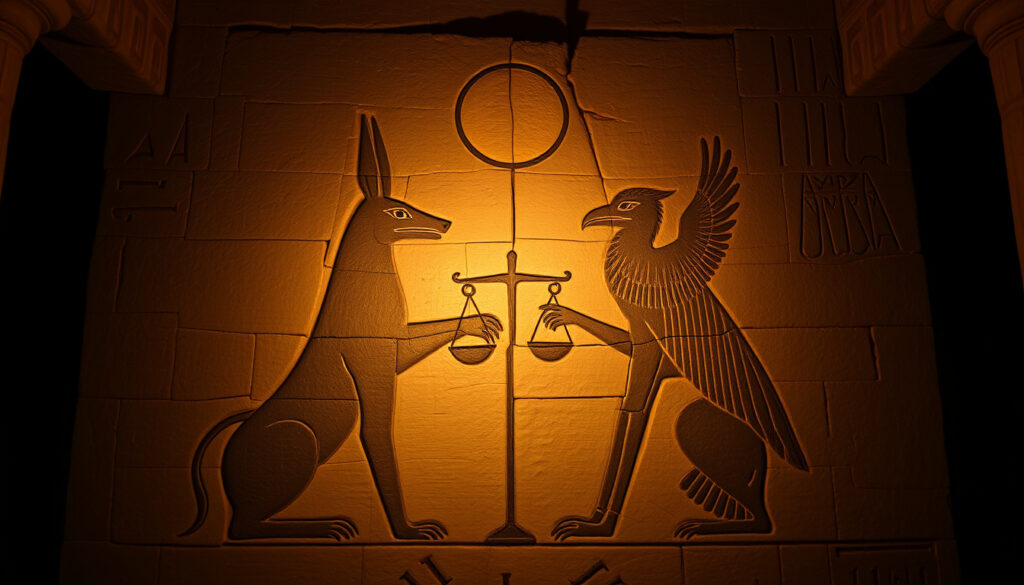
Egyptian Gods: 9, 10 & 12 Major Deities Explained | Anubis vs Ra
Anyone who’s ever flipped through a book on ancient Egypt has probably stumbled on a list of gods and wondered: why does the number keep changing? This guide unpacks those variations, explains the Ennead, and compares two famous deities — Anubis and Ra — so you can see how the pantheon really worked.
Known Egyptian deities: over 1,500 ·
Primary gods (Ennead): 9 ·
Commonly listed main gods: 12 ·
Anubis domain: death, mummification ·
Ra domain: sun, kingship
Quick snapshot
- The Great Ennead of Heliopolis (Atum, Shu, Tefnut, Geb, Nut, Osiris, Isis, Set, Nephthys) is well-established (Global Egyptian Museum – museum reference)
- Ra is the sun god and king of the gods in many sources (Britannica – encyclopedia entry)
- Anubis is god of mummification and the afterlife (Egyptian Museum – museum collection)
- Exact number of “main” gods – 9, 10, 12 lists vary across sources and time periods (Wikipedia – summary of scholarly debate)
- Whether a canonical 12 major gods ever existed across all of Egypt (Egypt Tours Portal – tour guide overview)
- Power hierarchy between some gods is not explicitly ranked in ancient texts (Wikipedia – summary of scholarly debate)
- c. 3100 BCE – Early dynastic period; evidence of major gods like Horus (Global Egyptian Museum)
- Old Kingdom (c. 2686–2181 BCE) – Ra becomes prominent; Pyramid Texts mention many gods (Britannica)
- New Kingdom (c. 1550–1070 BCE) – Amun-Ra rises; temple of Karnak dedicated to Amun (Egyptian Museum)
- Understanding why the number of major gods shifts from Heliopolis to Thebes (Global Egyptian Museum)
- Comparing Anubis and Ra to see why one is supreme and the other essential (Britannica)
- Exploring regional lists at different temple centers (Egypt Tours Portal)
Here are the key facts about major Egyptian gods in a concise table.
| Number of known deities | Over 1,500 |
| Most powerful god | Ra (Amun-Ra later) |
| God of the dead | Osiris |
| God of mummification | Anubis |
| Primary creator god | Atum (in Heliopolis) |
| Goddess of magic | Isis |
Who are the 9 major Egyptian gods?
The nine gods that form the Great Ennead of Heliopolis represent the oldest canonical grouping in ancient Egyptian religion. According to the Global Egyptian Museum (museum glossary), this set includes Atum, Shu, Tefnut, Geb, Nut, Osiris, Isis, Seth, and Nephthys. These nine are not a random collection; they trace a family tree from the creator Atum through successive generations.
The Ennead is a theological family, not just a flat list. Atum creates Shu (air) and Tefnut (moisture), who give birth to Geb (earth) and Nut (sky), who then produce Osiris, Isis, Set, and Nephthys. This structure explains why later lists drop or add deities – they reflect different theological priorities.
The Ennead of Heliopolis
- Atum – the creator sun god at the head (Global Egyptian Museum – museum reference)
- Shu – god of air
- Tefnut – goddess of moisture
- Geb – god of the earth
- Nut – goddess of the sky
- Osiris – god of the afterlife and judge of the dead
- Isis – goddess of magic and motherhood
- Set – god of chaos, storms, and the desert
- Nephthys – protective goddess of the dead
Roles of each deity in the Ennead
Each member of the Ennead had a domain that intertwined with the others. As Wikipedia (encyclopedia summary) notes, the Ennead is described as a family structure, not merely a flat list of nine names. Osiris ruled the underworld, Isis used magic to resurrect him, and Set murdered Osiris – a cycle that explained the annual Nile flood and the pharaoh’s divine right.
The implication: any list that claims “9 major Egyptian gods” is almost certainly referring to this Heliopolitan family. But other cities had their own preferred sets.
What are the 12 main gods of Egypt?
Six of the Ennead gods appear in most expanded lists, but six additional deities are regularly added to bring the count to twelve. A common modern summary of the 12 main gods includes Ra, Amun, Osiris, Isis, Horus, Set, Anubis, Thoth, Ptah, Hathor, Bastet, and Sobek (Britannica – curated list of 11 Egyptian gods and goddesses). Note that Britannica’s list of 11 includes Re (Ra) and omits Sobek, showing that “12” is not strict.
No official canon of 12 major gods ever existed across all of Egypt. Different temples and periods promoted their own local patron deities, so the “12” is a modern convenience, not an ancient classification.
The 12 most frequently cited deities
| Deity | Domain | Depiction |
|---|---|---|
| Ra | Sun, kingship | Falcon or man with sun disk |
| Amun | Hidden power, patron of Thebes | Man with double-plumed crown |
| Osiris | Afterlife, resurrection | Mummified man with green skin |
| Isis | Magic, motherhood | Woman with throne headdress |
| Horus | Sky, protection of pharaohs | Falcon-headed man |
| Set | Chaos, desert, storms | Mysterious animal-headed man |
| Anubis | Mummification, cemeteries | Jackal-headed man |
| Thoth | Writing, wisdom, moon | Ibis-headed man |
| Ptah | Craftsmen, creation | Mummified man with skullcap |
| Hathor | Love, music, cows | Cow or woman with cow horns |
| Bastet | Home, cats, protection | Cat-headed woman |
| Sobek | Water, Nile, crocodiles | Crocodile-headed man |
How this list compares to the Ennead
The 12-god list overlaps with the Ennead on Osiris, Isis, Set, and Nephthys (Nephthys is sometimes dropped). But it adds Ra (who merges with Atum in later theology), Horus (who is sometimes considered part of a Small Ennead), and deities from Memphis (Ptah), Thebes (Amun), and other regional centers. As Egypt Tours Portal (tour operator content) illustrates, the list expands beyond the Ennead to include famous gods like Hathor, Bastet, and Sobek. The pattern: the farther from Heliopolis, the more the list changes.
Who were the 10 gods of Egypt?
Some educational guides and ancient sources present a 10-god list that sits between the Ennead and the fuller 12. A typical 10 includes Ra, Amun, Osiris, Isis, Horus, Set, Anubis, Thoth, Ptah, and Hathor (Britannica – 11 Egyptian gods drops one to make 10? Actually Britannica lists 11, but many school resources trim to 10 by omitting Sobek or Bastet).
A common 10-god list
- Ra
- Amun
- Osiris
- Isis
- Horus
- Set
- Anubis
- Thoth
- Ptah
- Hathor
Similarities to the 12-god list
The 10-god list is essentially the 12-god list minus Bastet and Sobek – the two “animal-headed” deities associated with cats and crocodiles. This suggests that some compilers wanted to avoid too many animal forms or preferred deities with more prominent temple cults. The Global Egyptian Museum (museum resource) also notes a Small Ennead that includes Horus, Anubis, Ma’at, and Thoth, showing that the number 9 itself had elasticity – different enneads existed for different purposes.
The trade-off: a 10-god list is simple enough for classroom use but omits important local deities. Anyone studying Egyptian mythology should know that the “official” count was never fixed.
Who is stronger, Anubis or Ra?
This question comes up often in online forums, and the answer is clear once you understand each god’s domain. Ra is the supreme sun god and creator, the king of the gods in many sources (Britannica – encyclopedia list). Anubis, by contrast, is a specialized deity of mummification and cemetery protection (Egyptian Museum – museum deity entry).
If “stronger” means cosmic power and authority, Ra dwarfs Anubis. Ra creates and rules; Anubis serves a vital but subordinate role. Yet in the moment of death, Anubis holds more immediate influence over the soul than any sun god. Power is relative to context.
Powers and domains of Ra
- Creator god – Atum and Ra are often merged in solar creation traditions (Egypt Tours Portal – mythology overview)
- King of the gods – leads the pantheon in most myths
- Sun god – daily journey across the sky in his solar barque
- Associated with pharaonic kingship and divine order (Ma’at)
Powers and domains of Anubis
- God of mummification and embalming (Egyptian Museum – museum information)
- Protector of graves and cemeteries
- Guide of souls in the afterlife
- Jackal-headed – depicted with black fur symbolizing regeneration
Comparative analysis in mythology
In the Osiris myth, Anubis helps Isis mummify Osiris but does not challenge Set. Ra, however, is the judge who ultimately oversees the cosmic order. Ancient texts never rank the two explicitly, but the hierarchy is implicit: Ra receives hymns as the supreme deity, while Anubis receives prayers for protection at death (Britannica – comparative religious context).
The pattern: Anubis is essential but not supreme. Ra is supreme but distant. For an ancient Egyptian, you’d pray to both – but you’d fear offending Ra more.
Who are the 12 major deities?
The phrase “12 major deities” in Egyptian mythology often draws a parallel to the 12 Olympians of Greece, but the comparison is loose. As noted, no single official 12 existed; different temples had different pantheons. The most commonly cited list today is the one given earlier (Ra, Amun, Osiris, Isis, Horus, Set, Anubis, Thoth, Ptah, Hathor, Bastet, Sobek), but it’s a modern construct.
The concept of “major deities” in ancient Egypt
Major deities were those with state-sponsored temples, large priesthoods, and regular festivals. By that definition, the list changed over 3,000 years. Early on, Horus and Set were central. During the New Kingdom, Amun-Ra became the state god. In the Ptolemaic period, Greek rulers syncretized Egyptian gods with their own (Global Egyptian Museum – historical context).
Regional variations and overlapping lists
- Heliopolis: Ennead of 9 (Atum, Shu, Tefnut, Geb, Nut, Osiris, Isis, Set, Nephthys)
- Thebes: Amun, Mut, Khonsu (Theban Triad) – plus many others
- Memphis: Ptah, Sekhmet, Nefertem (Memphite Triad)
- Hermopolis: Ogdoad of 8 (four frog-headed and four snake-headed deities of chaos)
What this means: any list claiming “the 12 major gods of Egypt” is a selection, not an official canon. The best way to understand the pantheon is to see it as a network of overlapping local traditions, not a single hierarchy.
Six key deities, one pattern: power and domain specialisation follow a clear hierarchy from creator to specialist.
| Deity | Primary Domain | Power Level (Mythological) | Role in Pantheon | Key Symbol |
|---|---|---|---|---|
| Ra | Sun, creation, kingship | Supreme | King of gods, creator | Sun disk, obelisk |
| Amun | Hidden power, air | High (joined Ra) | Patron of Thebes, state god | Double-plumed crown |
| Osiris | Afterlife, resurrection | High | Judge of dead, underworld ruler | Crook and flail |
| Isis | Magic, motherhood | High | Protector, healer | Throne, ankh |
| Horus | Sky, pharaonic protection | High | Divine king, avenger of Osiris | Eye of Horus, falcon |
| Anubis | Mummification, death | Moderate | Embalmer, guide of souls | Jackal head |
Timeline of Egyptian god worship
- c. 3100 BCE – Early dynastic period; evidence of major gods like Horus
- Old Kingdom (c. 2686–2181 BCE) – Ra becomes prominent; Pyramid Texts mention many gods
- New Kingdom (c. 1550–1070 BCE) – Amun-Ra rises; temple of Karnak dedicated to Amun
- Ptolemaic period (332–30 BCE) – Greek influence; syncretism with Hellenistic deities
- Roman period & later – Worship declines with Christianity; knowledge preserved via texts (Britannica – historical overview)
The timeline shows how Egyptian religion evolved over millennia, influenced by shifts in political power and cultural exchange.
Clarity check
Confirmed facts
- Ennead of Heliopolis (Atum, Shu, Tefnut, Geb, Nut, Osiris, Isis, Set, Nephthys) is well-established (Global Egyptian Museum – museum glossary)
- Ra is the sun god and king of the gods in many sources (Britannica – encyclopedia)
- Anubis is god of mummification and the afterlife (Egyptian Museum – museum collection)
- Atum is the creator god at the head of the Great Ennead (Global Egyptian Museum – museum reference)
What’s unclear
- Exact number of “major” gods – 9, 10, 12 lists vary across sources and time periods (Wikipedia – scholarly summary)
- Whether a canonical 12 major gods ever existed across all of Egypt (Egypt Tours Portal – tour guide overview)
- Power hierarchy between some gods (e.g., Anubis vs Horus) is not explicitly ranked in ancient texts
Voices from the sources
“The Great Ennead of Heliopolis is commonly described as a group of nine deities.”
“Anubis is a major Egyptian deity associated with cemeteries, embalming, and the protection of graves.”
“Ra is the chief sun god and the top deity of the Ennead.”
“A common modern summary lists the Ennead gods as family members descending from Atum through Shu and Tefnut to Geb and Nut, then to Osiris, Isis, Set, and Nephthys.”
For a reader looking to make sense of the Egyptian pantheon, the implication is clear: don’t look for a single “official” list. Instead, learn the Ennead as the baseline, then layer on the most popular additions based on region and time. The number 12 is a modern convenience – but the divine family of nine from Heliopolis is where the story really begins.
Related reading: **Saturn Devouring His Son** · **Saturn Devouring His Son: Myth and Meaning**
study.com, study.com, en.wikipedia.org, youtube.com, youtube.com, ancient-egypt-online.com
For readers seeking a broader overview, complete pantheon guide offers an extensive look at the full array of Egyptian gods and their roles.
Frequently asked questions
What is the difference between a god and a goddess in Egyptian mythology?
There is no strict hierarchy – gods and goddesses both held power, though goddesses like Isis and Hathor had domains of magic, love, and motherhood. Both could be creators or protectors.
How were Egyptian gods worshipped in daily life?
Through temples, offerings, festivals, and household shrines. Commoners could pray to gods like Bes or Taweret for home protection, while state temples served major gods like Amun-Ra with daily rituals.
Did the ancient Egyptians believe in a single supreme god?
At various times, a single god was elevated above others – Ra during the Old Kingdom, Amun-Ra during the New Kingdom, and Aton briefly under Akhenaten. But polytheism remained the norm.
What animal is associated with the god Horus?
The falcon. Horus is almost always depicted with the head of a falcon, representing his role as a sky god and protector of pharaohs.
Who is the Egyptian god of wisdom?
Thoth, often depicted with the head of an ibis. He was the god of writing, knowledge, and the moon, and served as the scribe of the gods.
Are there female versions of major gods like Ra?
Yes, some goddesses shared domains – Hathor was associated with the sun (as the Eye of Ra), and Sekhmet was a warrior goddess. But Ra himself was male.
How did the Egyptian pantheon change over time?
It absorbed local gods, merged deities (like Amun-Ra), and syncretised with Greek gods during the Ptolemaic period. Worship declined after Roman adoption of Christianity.
More related posts
 Mike O’Hearn: 4-Time Mr. Universe Who Never Won Olympia
 Steve Kerr: Biography, Health, Father’s Death, NBA Rings
 What Is a Dutch Oven – Definition, History and Uses
 I Think Therefore I Am – Meaning Origin and Philosophy
 How Old Am I? Best Free Age Calculator by Date of Birth
 Bob Rae’s Political Career: From Ontario Premier to UN Ambassador
 Costco Canada Black Friday 2025: Vendredi Fou Dates & Deals
 Kate Mara Movies and TV Shows: Full List and Roles