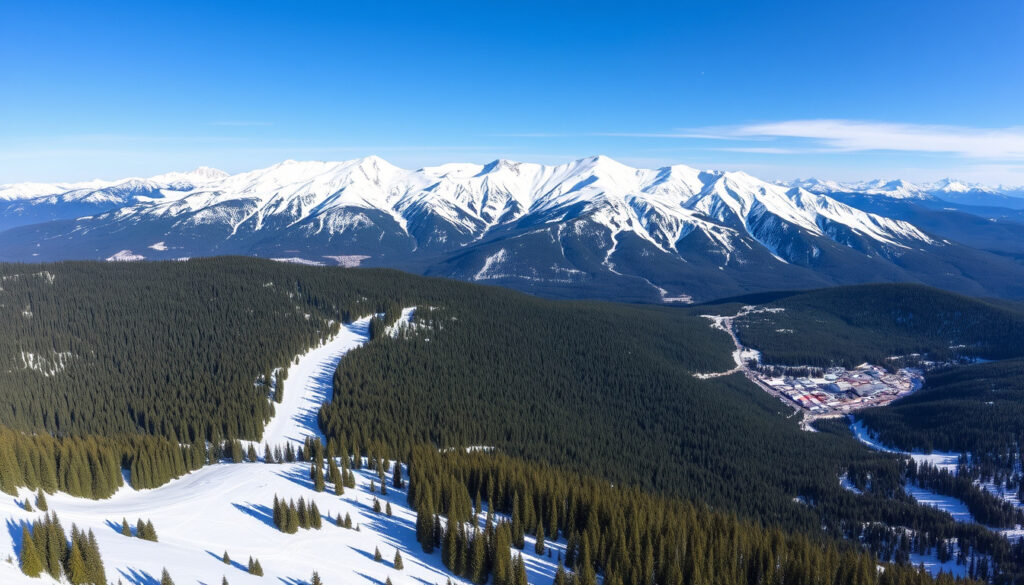
Whistler Mountain: Facts, Location, Cost, Best Time & History
Anyone who has gazed up at the Coast Mountains from Vancouver’s skyline has probably wondered about Whistler Mountain’s pull — a place that has spent decades balancing two identities: a luxury resort where celebrities buy second homes and a raw wilderness where lightning fires still carve their mark. This guide walks through where Whistler sits, what it costs, when to go, and the stories that shaped its modern character.
Elevation: 2,436 m (7,992 ft) ·
Skiable terrain: 8,171 acres ·
Number of runs: Over 200 ·
Distance from Vancouver: 120 km (75 mi) ·
Average annual snowfall: 11.7 m (38 ft)
Quick snapshot
- Summit elevation 2,436 m (7,992 ft) (Wikipedia (encyclopedic reference))
- Hosted 2010 Winter Olympics alpine and sliding events (Whistler Blackcomb (official resort))
- Distance from Vancouver 120 km (Government of British Columbia (provincial tourism data))
- Lightning fires extinguished in August 2009 (CBC News (national broadcaster))
- Exact number of celebrity residents (anecdotal, no official list)
- Summer bike-park day pass ~USD 57 (single source, not independently verified)
- November average snowfall 2.4 m (moderate confidence; single resort source)
- Driving time from Vancouver ~2 hours (varies with traffic and conditions)
- Year-round destination status (marketing claim, seasonal operations vary)
- 1966: Whistler Mountain ski area opens with first lift (Whistler Blackcomb (official resort))
- 2010: Hosts Winter Olympics events (Whistler Blackcomb (official resort))
- 2025/26 season passes and day passes available for purchase online (Whistler.com (tourism authority))
Five key numbers, one pattern: Whistler Mountain is both a natural mountain and a purpose-built resort machine.
| Label | Value |
|---|---|
| First ski lift installed | 1966 |
| Mountain range | Fitzsimmons Range, Coast Mountains |
| Number of glaciers | 2 (Whistler and Blackcomb) |
| Annual visitors (approx.) | 2 million+ (pre-pandemic) |
| Top elevation drop | 1,530 m (5,020 ft) |
Why is Whistler Mountain famous?
Whistler Mountain sits in the Fitzsimmons Range of the Coast Mountains, about 120 km north of Vancouver, Canada. Its fame comes from being part of Whistler Blackcomb — the largest ski resort in North America by skiable acres (Whistler Blackcomb (official resort)). Over 2 million people visit annually, drawn to 8,171 acres of terrain and more than 200 marked runs.
What is Whistler known for?
Whistler Blackcomb markets itself as a year-round destination (Rough Guides (travel guide)). Winter means world-class skiing and snowboarding. Summer shifts to mountain biking, hiking, and glacier sightseeing. The PEAK 2 PEAK Gondola, which connects Whistler and Blackcomb mountains, is included with all lift tickets (KAYAK (travel booking platform)).
Which celebrities live in Whistler?
The resort is a known retreat for actors, musicians, and professional athletes. Specific names surface in gossip columns, but no official list exists. The proximity to Vancouver (2 hours by car) makes it practical for Vancouver-based stars and Hollywood visitors who land at YVR.
Whistler’s celebrity draw is real but unverifiable. For visitors, it adds a layer of glamour, but the real value is the consistent snow and lift infrastructure — not a star-sighting chance.
The catch: The celebrity cachet fuels high property prices and dining costs, but no official data confirms exactly who lives there. It’s part of the resort’s lore, not its operating reality.
What is the closest major city to Whistler?
Vancouver, British Columbia, sits 120 km south of Whistler Mountain. Whistler Blackcomb is located adjacent to Whistler Village, the main commercial and accommodation hub (Government of British Columbia (provincial tourism data)).
How far is Whistler from Vancouver?
The driving distance is approximately 120 km (75 mi) via the Sea-to-Sky Highway (BC-99). The route takes about 2 hours in normal conditions (KAYAK (travel booking platform)).
How long is the drive from Vancouver to Whistler?
Planning 2 hours is realistic. Traffic can add 30-45 minutes on peak weekend days or during snowfall. The highway is well-maintained but winding in sections. No tolls apply on this route.
What airport do you fly into for Whistler?
Vancouver International Airport (YVR) is the closest major airport. From YVR, you can rent a car, take a shuttle bus, or book a private transfer. No direct flights serve Whistler itself.
Where is Whistler Blackcomb located?
The resort sits adjacent to Whistler Village, at the base of both Whistler and Blackcomb mountains. The village is pedestrian-only, with lifts departing from three base areas: Whistler Village, Upper Village (Blackcomb), and Creekside (Rough Guides (travel guide)).
How much does it cost to go up Whistler Mountain?
The answer depends on when you book and what you add. Rough Guides notes that lift ticket prices rise in peak periods around Christmas/New Year and mid-February to mid-March (Rough Guides (travel guide)). Buying online at least 7 days ahead brings the biggest savings (Whistler.com (tourism authority)).
Why is Whistler so expensive?
Premium pricing reflects three drivers: world-class terrain, constant demand, and high operating costs. Accommodation and dining in Whistler Village are expensive because land is limited and the resort is a monopoly on its mountain. The Edge Card, Epic Pass, or multi-day lodging packages can cut the per-day cost significantly. One data point: 2025/26 day passes start from CAD 102 when booked in a lodging package (Whistler.com (tourism authority)). Otherwise, a 1-day adult holiday-access ticket runs CAD 158; a 1-day non-holiday-access ticket is CAD 135 (Whistler.com (tourism authority)).
Single-day walk-up buyers pay the highest premium. Lodging packages and advance purchases shift the cost closer to CAD 100 per day for adults. Without planning, a family of four faces CAD 600+ for lift-only access during peak weeks.
The pattern: Whistler’s pricing is designed to push visitors toward multi-day packages and advance commitments. The resort intentionally makes single-day walk-up tickets feel like a luxury item, steering cost-conscious skiers toward bundled deals.
What is the best month to go to Whistler?
January through March deliver consistent snow depths and reliable conditions for skiing. Whistler Blackcomb’s official winter guide says November averages 2.4 meters of snowfall. Mid-November to late December offers early-season snow, smaller crowds, and some of the season’s best prices (Whistler Blackcomb (official resort)).
Summer (July-September) is dry and warm, with hiking, biking at the Whistler Mountain Bike Park (day passes around USD 57 in high season), and lakes for swimming. Spring skiing (March-April) offers slushy conditions on lower slopes. Fall (October-November) sees limited snow and many lifts closed — the quietest, cheapest time but also the least reliable for mountain access.
For a British Columbia family booking a winter trip, January through March guarantees solid snow cover. For a budget-conscious summer visitor, July to September delivers reliable weather and discounted accommodation compared with peak winter rates.
The implication: Whistler is a year-round resort, but the experience differs drastically by season. A visitor who shows up in October expecting winter conditions will be disappointed. The resort’s marketing claims “no bad time to visit” — but that’s conditional on matching activities to months.
What happened in August 2009 on Whistler Mountain?
Lightning-sparked fires swept through Whistler Mountain in August 2009, burning within the Whistler Blackcomb boundary (CBC News (national broadcaster)). Crews extinguished the fires quickly with helicopter support. No major damage to infrastructure was reported; resort operations were unaffected. The event remains a footnote for visitors but a vivid memory for locals, who recall fire crews stationed on the mountain amid a dry August.
The pattern: The 2009 fires underscore Whistler Mountain’s dual reality: it’s a polished resort, but still a natural mountain in the Coast Mountains, subject to wildfire risk, weather variability, and seasonal transformation. That tension — luxury infrastructure built on wild terrain — defines the place.
Timeline
- 1966: Whistler Mountain ski area opens with first lift (Whistler Blackcomb (official resort))
- 1980: Blackcomb Mountain opens adjacent (Whistler Blackcomb (official resort))
- 1997: Merged to become Whistler Blackcomb resort (Whistler Blackcomb (official resort))
- August 2009: Lightning-sparked fires extinguished on Whistler Mountain (CBC News (national broadcaster))
- 2010: Whistler Mountain hosts Winter Olympics events (Whistler Blackcomb (official resort))
Clarity check
Confirmed facts
- Whistler Mountain elevation 2,436 m (Wikipedia (encyclopedic reference))
- Hosted 2010 Winter Olympics (Whistler Blackcomb (official resort))
- Distance from Vancouver 120 km (Government of British Columbia (provincial tourism data))
- Lightning fires in August 2009 (CBC News (national broadcaster))
- 2025/26 day-pass pricing CAD 102 (lodging package), CAD 135 (non-holiday), CAD 158 (holiday) (Whistler.com (tourism authority))
What’s unclear
- Exact number of celebrity residents (anecdotal, no official list)
- Summer bike-park day pass ~USD 57 (single source, not independently verified)
- November average snowfall 2.4 m (moderate confidence; single resort source)
- Driving time from Vancouver ~2 hours (varies with traffic and conditions)
- Year-round destination status (marketing claim, seasonal operations vary)
Quotes
Whistler Blackcomb is North America’s largest ski resort with over 200 marked runs and 8,171 skiable acres.
— Whistler Blackcomb (official resort)
The fires on Whistler Mountain in August 2009 were quickly extinguished by crews using helicopters, with no damage to resort infrastructure.
— CBC News (national broadcaster)
For a family from Vancouver planning a winter escape, the choice is clear: book a lodging package at least seven days ahead, travel in January to March for reliable snow, and budget for the premium pricing that comes with one of North America’s most iconic mountains — or skip the peak weeks and find a deal.
whistlerblackcomb.com, canadiansky.co.uk, whiskijackresorts.com, reddit.com, reddit.com, whistlerblackcomb.com, blackcombpeaks.com, onthesnow.com, snow.com
Frequently asked questions
Is Whistler Blackcomb open year-round?
Yes. Winter operations typically run November to mid-May, and summer operations (biking, hiking, sightseeing) run May to October. Some lifts close seasonally in fall (Whistler Blackcomb (official resort)).
Do I need a car to get around Whistler Village?
No. Whistler Village is pedestrian-only, and free shuttle buses connect the base areas. Many visitors arrive without a car by shuttle from YVR.
What is the best way to get from Vancouver to Whistler without a car?
Shuttle buses (e.g., Whistler Express, Pacific Coach Lines) run from YVR and downtown Vancouver to Whistler Village. The trip takes about 2 hours. Private transfers are available but more expensive (KAYAK (travel booking platform)).
Can I ski Whistler Mountain in summer?
Summer skiing is limited to the Horstman Glacier on Blackcomb Mountain, typically from late May to early August, conditions permitting. Main Whistler Mountain lifts close for summer.
Are there bears in Whistler and should I be concerned?
Yes, black bears are common in the area during summer. They generally avoid people. Store food properly, keep distance, and report aggressive behavior to resort staff.
What is the Edge Card and how does it save money on lift tickets?
The Edge Card is a multi-day pass that offers discounted per-day rates compared with single-day tickets. It’s reloadable and valid for the whole season. It works best for visitors who ski 3-6 days per season (Whistler.com (tourism authority)).
Is Whistler Mountain dog-friendly?
Dogs are not allowed on ski lifts or in the alpine during winter. Summer hiking trails may allow dogs on leash in designated areas. The resort does not permit pets in most lodges or on the gondola.
Related reading
More related posts
 Corey Feldman: Depp Allegations, Divorce, and Life After Fame
 Raegan Revord: Gender Identity, Age, Net Worth & More
 Alisha Newton: Partner, Heartland Departure, Net Worth & Now
 Coral Reef Guide: Ireland’s Cold-Water Reefs Explained
 Maria Bello: Coming Out, Illness, Partner & Net Worth
 November 9 Colleen Hoover – Complete Guide and Ending Explained
 X-Men ’97 Season 2: 2026 Release, Apocalypse and Sabretooth
 Paulina Gretzky: Biography, Children, Husband, and Career