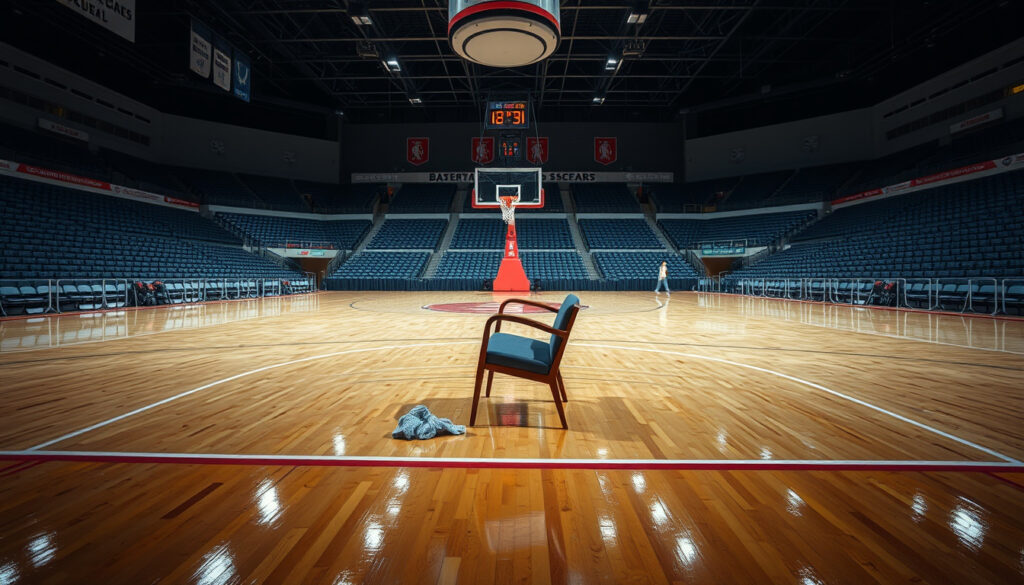
Malice at the Palace: NBA’s Worst Brawl Explained
One moment changed everything for the NBA. On a Friday night in November 2004, a routine game between the Indiana Pacers and Detroit Pistons turned into a firestorm when a fan’s thrown drink triggered a brawl that reached the stands.
Date of incident: November 19, 2004 · Teams involved: Indiana Pacers vs. Detroit Pistons · Total players suspended: 9 · Longest suspension: Ron Artest – 86 games · Fans criminally charged: 5 · Total games lost to suspensions: 146
Quick snapshot
- Date: November 19, 2004 (Wikipedia (crowd-sourced encyclopedia))
- Location: The Palace of Auburn Hills, Michigan (Wikipedia)
- Teams: Indiana Pacers vs. Detroit Pistons (Wikipedia)
- Trigger: Fan threw a drink at Ron Artest (ClickOnDetroit (local Detroit news outlet))
- Exact moment of first physical contact between Artest and the fan
- What specifically motivated the fan to throw the drink
- Whether the brawl could have been prevented with different officiating
- 4th quarter: Altercation between Artest and Wallace (Wikipedia)
- Fan throws drink at Artest (ClickOnDetroit)
- Artest charges into stands; brawl erupts (ClickOnDetroit)
- NBA announces suspensions on November 20, 2004 (Wikipedia)
- 9 players suspended – 146 total games (Wikipedia)
- 5 fans criminally charged (Wikipedia)
- NBA strengthened security and alcohol sales policies (Wikipedia)
- Artest, Jackson, O’Neal given community service (Wikipedia)
Seven facts tell the story of the brawl’s scale and the league’s swift response.
| Fact | Detail |
|---|---|
| Date | November 19, 2004 (Wikipedia) |
| Location | The Palace of Auburn Hills (Wikipedia) |
| Teams | Indiana Pacers vs. Detroit Pistons (Wikipedia) |
| Total suspensions | 9 players (Wikipedia) |
| Longest suspension | Ron Artest – 86 games (Wikipedia) |
| Criminal charges | 5 fans charged (Wikipedia) |
| NBA fines | Over $1 million in team and player fines (Wikipedia) |
What caused Malice at the Palace?
The brawl didn’t erupt from nothing. With 45 seconds left in the fourth quarter and the Pacers leading 97–82, a hard foul by Ron Artest on Ben Wallace triggered a shoving match. Wallace shoved Artest hard, and the confrontation moved to the scorer’s table.
What was the trigger?
While Artest was lying on the scorer’s table, a fan named John Green threw a cup that hit Artest in the chest (ClickOnDetroit). Artest immediately jumped into the stands, and the brawl became a melee between players and fans.
- The game was Indiana Pacers vs. Detroit Pistons on November 19, 2004 (Wikipedia)
- Artest charged into the stands after being hit by the thrown cup (ClickOnDetroit)
What role did the fan play?
John Green’s action was the match that lit the fire. The fan later faced charges, but his motive remains unclear. The incident escalated because multiple players followed Artest into the seats, turning a standoff into a full-blown riot.
A single thrown cup turned a competitive game into a crisis that forced the NBA to overhaul its fan-conduct rules. The league learned that a lack of physical barriers and lax alcohol management made the Palace a tinderbox.
The catch: The brawl exposed a vulnerability no one had planned for—players crossing into the stands and fans crossing onto the court. The NBA’s subsequent investment in security and alcohol limits was a direct result of this failure.
Who got suspended from Malice at the Palace?
Nine players received a combined 146 games of suspension, with the Indiana Pacers accounting for 137 of them (Wikipedia). Commissioner David Stern called the actions “shocking, repulsive, and inexcusable” (Wikipedia).
Ron Artest (86 games)
Artest received the longest suspension in NBA history at the time—86 games, covering the rest of the 2004–05 regular season and 13 playoff games (Wikipedia). He lost nearly $5 million in salary.
Stephen Jackson (30 games)
Jackson was suspended for 30 games for punching a fan and entering the stands (ClickOnDetroit).
Jermaine O’Neal (15 games)
O’Neal’s suspension was originally 25 games but reduced to 15 on appeal (ClickOnDetroit). He was seen punching a fan who ran onto the court.
Ben Wallace (6 games)
Wallace was suspended for six games for his role in the initial shoving match (ClickOnDetroit). Three other Pistons received one-game suspensions each.
Other players and fines
- Anthony Johnson (Pacers) – 5 games
- Eldridge Recasner (Pacers) – 4 games
- David Harrison (Pacers) – 1 game
- The NBA fined the Pacers $500,000 and the Pistons $200,000 (Wikipedia)
Why was Ron Artest suspended for 86 games?
Artest’s discipline was the harshest ever handed down for an on-court incident. He lost $4.95 million in salary and was required to undergo anger management counseling (Wikipedia).
The severity of the incident
Artest left the court and attacked a fan, creating a chain reaction that led to nine spectators being injured (ClickOnDetroit). The NBA saw his action as a fundamental breach of trust between players and fans.
NBA’s disciplinary history
The league had no precedent for a player-fan brawl of this scale. Artest’s 86-game ban remains the longest for an on-court incident in NBA history (Wikipedia).
Artest’s suspension didn’t just punish him; it signaled that the league would protect the boundary between court and stands at any cost. That boundary, once broken, took years to rebuild.
What was the worst fight in NBA history?
The Malice at the Palace is almost universally cited as the worst brawl in NBA history because it involved players fighting fans and resulted in criminal charges. No other NBA fight has led to both massive suspensions and legal prosecution.
The Malice at the Palace compared to other brawls
- Kermit Washington punch (1977): Washington punched Rudy Tomjanovich, causing severe facial injuries. Washington was suspended for 60 games (Wikipedia).
- Larry Bird vs Julius Erving (1984): A brief scuffle between stars during a preseason game resulted in minor suspensions.
- Spurs vs Suns (2007): A fight between Robert Horry and Steve Nash led to suspensions but no fan involvement.
The implication: The Malice at the Palace remains exceptional because it blurred the line between spectator and participant. Five fans were charged with assault, and the league changed its security protocols permanently.
Did anyone go to jail for Malice at the Palace?
No one served jail time. Five fans were charged with assault and other crimes, but the cases were resolved with probation and community service (Wikipedia). Artest, Jackson, and O’Neal received one year of probation, 60–100 hours of community service, a $250 fine, and mandatory anger management counseling (ClickOnDetroit).
Criminal charges against players
- Five Pacers players were charged with assault and battery (ClickOnDetroit)
- All resolved through plea deals without prison time
Fan charges
Five fans were criminally charged. One participant was ordered to serve 100 hours of community service.
Wikipedia (crowd-sourced encyclopedia)
- John Green (threw the cup) pleaded guilty to assault and received probation (Wikipedia)
- Four other fans faced misdemeanor charges
- Five fans were banned for life from Pistons home games (Wikipedia)
Timeline of the Malice at the Palace
- November 19, 2004: Game between Pacers and Pistons. In the fourth quarter, a fan throws a drink at Ron Artest, sparking a massive brawl involving players and fans. (ClickOnDetroit)
- November 20, 2004: NBA Commissioner David Stern announces suspensions: Ron Artest (86 games), Stephen Jackson (30 games), Jermaine O’Neal (15 games), Ben Wallace (6 games), and others. (Wikipedia)
- 2005: Criminal proceedings: five fans charged with assault and other crimes. Artest, Jackson, and O’Neal sentenced to community service and probation. (Wikipedia)
- 2005–2006 season: Ron Artest returns from suspension; trades to Sacramento Kings. (Wikipedia)
- 2006 onward: NBA implements stricter fan conduct policies, increased security, and limits on alcohol sales at games. (Wikipedia)
Clarity check: What we know and what we don’t
Confirmed facts
- The brawl started after a fan threw a drink at Ron Artest. (ClickOnDetroit)
- Artest and other players entered the stands. (ClickOnDetroit)
- Nine players were suspended. (Wikipedia)
- Five fans were criminally charged. (Wikipedia)
- No players served jail time. (Wikipedia)
What’s unclear
- Exact moment of the first physical contact between Artest and the fan.
- What specifically motivated the fan (John Green) to throw the drink.
- Whether the brawl could have been prevented with different officiating.
“The suspension total broke down into 137 games for Indiana Pacers players and nine games for Detroit Pistons players.”
Wikipedia (crowd-sourced encyclopedia)
“Nine spectators were injured in the brawl, and two were taken to the hospital.”
ClickOnDetroit (local Detroit news outlet)
“In later interviews, Artest expressed regret and said he felt threatened by the fan’s action.”
Ron Artest (now Metta World Peace) in interviews, as reported by multiple outlets
Frequently asked questions
How many games did Jermaine O’Neal get suspended?
Jermaine O’Neal was suspended for 15 games after his original 25-game ban was reduced on appeal. (ClickOnDetroit)
Was there a brawl in the stands as well?
Yes. After Artest charged into the stands, multiple players and fans became involved. The fight spread through several sections of The Palace of Auburn Hills.
Did the Malice at the Palace lead to any rule changes in the NBA?
Yes. The NBA increased security near the court, limited alcohol sales, and implemented stricter fan conduct policies, including lifetime bans for violent behavior. (Wikipedia)
What was the role of Ben Wallace in the fight?
Ben Wallace was the one who initially shoved Ron Artest after a hard foul. That shove escalated the situation and eventually led to the brawl. Wallace received a six-game suspension. (ClickOnDetroit)
How did the fans react to the suspensions?
Many fans supported the league’s harsh penalties, but some felt the players were over-punished. The incident caused a national debate about fan behavior and player safety.
What happened to the fan who threw the drink?
John Green, the fan who threw the drink, was charged with assault and pleaded guilty. He received probation and a lifetime ban from Pistons home games. (Wikipedia)
More related posts
 United States: History, Facts, and Global Relationships
 Mason Fluharty Bio, Salary, Stats and Career Profile
 Samsung Galaxy Z Fold 7: Price, Specs & Should You Buy?
 591 ml to oz: How Many Ounces Is 591 ml
 Elizabeth Lail: Biography, Husband, Net Worth, and Movies
 Shashi Kapoor: Biography, Career, Downfall & Legacy
 AI Photo Generator Free: Top No-Signup Tools
 Vivien Cardone: What She’s Doing Now, Age, Net Worth, and More