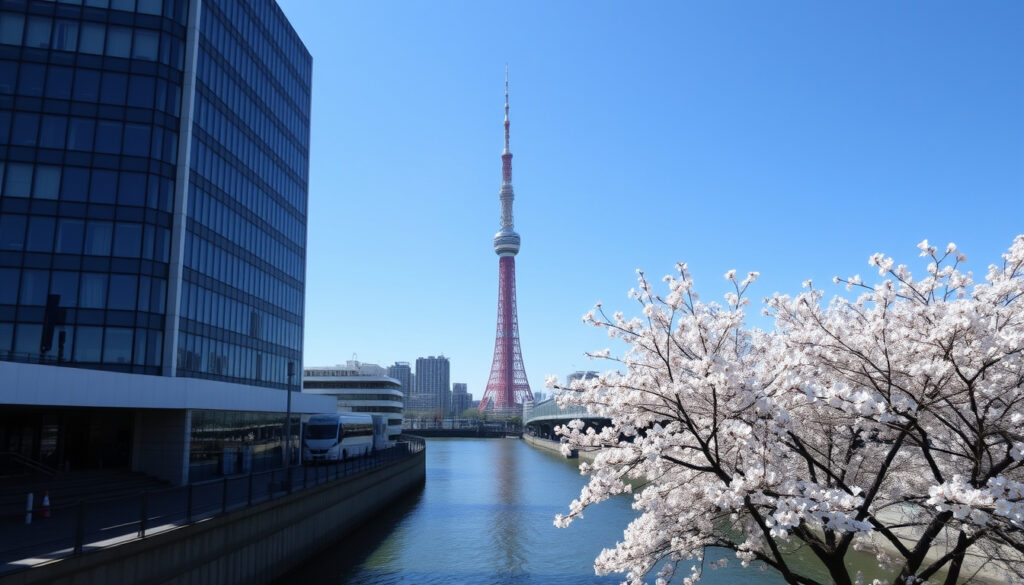
Tokyo Skytree: Complete Guide to Japan’s Tallest Tower
Anyone who has looked up at the Tokyo Skytree from the streets of Sumida knows it’s not just a tower — it’s the vertical backbone of the city’s broadcasting system and a tourist magnet rolled into one. Rising 634 metres (2,080 feet) above the neighbourhood, it opened in 2012 and quickly earned the title of the world’s tallest tower. This guide walks you through the ticket choices, the best decks for views, the story behind its height, and how it stacks up against Tokyo’s older icon, Tokyo Tower.
Height: 634 m (2,080 ft) ·
Observation decks: 350 m (Tembo Deck) and 450 m (Tembo Galleria) ·
Floors: 29 above ground (observation accessible via floors 26–29) ·
Opened: February 2012 ·
Adult ticket (Day Pass): ¥2,100 ·
World ranking: Tallest tower (not structure)
Quick snapshot
- Height of 634 m officially verified — Britannica (encyclopedia authority)
- Two observation decks at 350 m and 450 m — Tripadvisor (travel review platform)
- Opened to the public on 22 May 2012 — Britannica
- Designed by Nikken Sekkei — Wikipedia (community encyclopedia)
- Whether Mount Fuji is visible on any given day — depends on weather and humidity
- Exact crowd density at any hour — varies seasonally, no live data published
- Future ticket price changes — not announced beyond current year
- Full list of shops inside the tower — may rotate without notice
- July 2008: Construction begins — Wikipedia
- February 2012: Official opening — Britannica
- May 2012: Guinness World Record as tallest tower — Wikipedia
- Continued maintenance and potential lighting upgrades for 2024–2025 events
- No announced expansion of observation decks or major new attractions
- Ticket pricing likely to remain competitive with other Tokyo observation venues
Twelve key facts, one takeaway: the Skytree is a dual-purpose broadcast and tourism tower whose engineering choices — especially the 634-metre height — tell a story about Japanese tradition and modern technology.
| Label | Value |
|---|---|
| Official name | Tokyo Skytree |
| Type | Broadcast and observation tower |
| Location | Sumida, Tokyo, Japan |
| Coordinates | 35°42′36″N 139°48′39″E |
| Construction started | July 2008 |
| Completed | February 2012 |
| Height | 634 m (2,080 ft) |
| Floors | 29 above ground (observation on floors 26–29) |
| Elevators | Two main elevators, speed 600 m/min (10 m/s) |
| Architect | Nikken Sekkei |
| Main contractor | Obayashi Corporation |
| Annual visitors | Approximately 6 million (pre-COVID) |
What this means: The Skytree’s numbers are not arbitrary — 634 was chosen because the digits 6, 3, and 4 can be read as “mu-sa-shi” in Japanese, an old name for the region where the tower stands.
What’s so special about the Tokyo Skytree?
Design and architecture
Designed by Nikken Sekkei (leading Japanese architecture firm), the tower combines a futuristic silhouette with a nod to traditional Japanese aesthetics. The triangular base gradually morphs into a circle as it rises, a shape that reduces wind resistance — a necessity in a typhoon-prone region.
The height of 634 m was chosen deliberately: the digits 6-3-4 can be read as “Mu-sa-shi” in Japanese, the old name of the province that includes Tokyo, according to Britannica.
Observation decks and glass floor
Two main observation levels exist: the Tembo Deck at 350 m and the Tembo Galleria at 450 m, as confirmed by Tripadvisor (travel review platform). The Tembo Deck features glass floor panels that let you look straight down 350 metres — a thrill for some, a nerve-wracking moment for others. The Tembo Galleria is a spiral skywalk that wraps around the tower, 100 metres higher than the lower deck.
Lighting and illumination
The tower’s lighting changes with the seasons: a cool blue in summer, warm amber in autumn, and special colours for events like Christmas and New Year. The effect is designed by lighting designer Motoko Ishii, who also lit Tokyo Tower and the Rainbow Bridge, as noted by Wikipedia.
Dining and shopping
At the base, Tokyo Skytree Town houses a shopping mall, an aquarium, and several restaurants. The observatory itself has a café and bar, making it possible to enjoy a meal 350 metres above the city. Tokyo Cheapo (budget travel guide) notes that the dining options are pricey but the views are unmatched.
The Skytree’s design isn’t just about height — it’s a deliberate cultural statement. The 634-metre figure ties the tower to the historical region of Musashi, giving visitors a reason to remember that Tokyo’s modern skyline is anchored in old names.
Is it worth it to go up the Tokyo Skytree?
Cost versus experience
An adult Day Pass to the Tembo Deck costs ¥2,100 as of 2025, according to Tokyo Cheapo. Adding the Tembo Galleria brings the combo ticket to ¥3,100. Japan Rail Pass (travel logistics guide) confirms that upgrading from the lower deck to the combo can be done at the deck ticket counter by paying the difference.
Weekday tickets are cheaper than weekend and holiday tickets, and children under 6 enter free, as reported by Tokyo Cheapo. Student pricing (ages 12–17) is available on some third-party platforms, per Trip.com (travel aggregator).
Best times to visit
Midday and weekends are the most crowded. The best value for your money is during the twilight window — buy a late-afternoon ticket and you’ll see the city in daylight, sunset, and then the illuminated night skyline, all in one visit. Tokyo Cheapo recommends arriving around 15:30–16:00 for the best experience.
Comparing ticket tiers (Day Pass vs. Combo)
The Day Pass gives you access to the Tembo Deck only. The Combo adds the Tembo Galleria (100 m higher). If you’re after the highest public viewpoint and the glass-floor skywalk, the Combo is worth the extra ¥1,000. For most visitors, the Tembo Deck alone is already spectacular — the Galleria is a premium upgrade.
The pricing structure encourages you to make a choice: the lower deck is a bargain, but the upper deck gives you the full “tallest tower” experience. For budget-conscious travellers, the Tembo Deck is more than enough; for photography enthusiasts, the Galleria’s 360° skywalk is worth the premium.
The verdict: If you’re in Tokyo for a short trip, the Skytree is a splurge that delivers. The ¥2,100 entry fee is competitive with other world-class observation decks, and the combo ticket is a fair upgrade for the extra height.
Is the Tokyo Skytree the tallest in the world?
Tallest tower vs. tallest structure
Yes, the Tokyo Skytree is the tallest tower in the world at 634 m, but it is not the tallest structure. That distinction belongs to the Burj Khalifa in Dubai (828 m), as noted by Britannica. The difference lies in the ratio of habitable floor space: a tower is defined as a structure where the habitable area is less than 50% of the total floor area, while a building like the Burj Khalifa is considered a building (skyscraper).
Global ranking of towers
As of 2025, the Skytree holds the Guinness World Record for tallest tower. The second tallest, the Guangzhou CTF Finance Centre in China, is a skyscraper (building), not a tower in the technical sense. Among broadcast towers, the Skytree is the tallest by a wide margin — the next closest is the CN Tower in Toronto at 553 m.
Comparison with Burj Khalifa and Merdeka 118
The Burj Khalifa (828 m) and Merdeka 118 in Kuala Lumpur (678.9 m) are both classified as buildings, not towers. The Tokyo Skytree is the tallest freestanding broadcast tower, a category that includes structures like the Ostankino Tower in Moscow (540 m) and the Oriental Pearl Tower in Shanghai (468 m).
The catch: The term “tallest tower” is a technical distinction that matters for engineering records but not for your view. The Skytree’s observation decks are among the highest of any accessible tourist attraction in the world, period.
Can you see Mount Fuji from Tokyo Skytree?
Visibility conditions
Yes, on a clear day with low humidity, Mount Fuji is visible from the Tokyo Skytree. The best conditions occur in winter (December–February) during the morning hours, when the air is driest. Tokyo Cheapo notes that the official website and visitor guides warn that sightings are not guaranteed — clouds, haze, and smog often obscure the view in warmer months.
Best season and time of day
Winter mornings, around 9:00–11:00, give you the highest probability of seeing Mount Fuji to the west. The mountain appears as a faint, snow-capped cone on the horizon. From the Tembo Deck (350 m) or the Tembo Galleria (450 m), the view is essentially the same — the extra height of the Galleria doesn’t significantly improve the sighting because the distance is the main factor.
Which observation deck offers the best view
Both decks offer a westward view of Mount Fuji, but the Tembo Galleria’s open-air section (on windy days it’s closed) provides a slightly clearer line of sight. For the best experience, go to the west-facing side of the Tembo Deck on a clear winter morning.
The Skytree’s height works against Mount Fuji visibility: the higher you go, the more atmosphere you have to look through. On a hazy day, the mountain is invisible even from the 450-metre deck. The better bet is to check the weather forecast and aim for a day with visibility above 50 km.
Why this matters: Many travellers plan their entire Skytree visit around the hope of seeing Mount Fuji. The reality is that it’s a lucky bonus, not a guarantee. If you’re determined, plan your visit for a clear winter morning and keep your expectations in check.
Is it better to go to the Tokyo Skytree at night or day?
Daytime advantages
During the day, you can see the entire layout of Tokyo — the Sumida River, the skyscrapers of Shinjuku, and on clear days, Mount Fuji. The city looks like a sprawling model set. Klook (activity booking platform) highlights that daytime views are especially good for photography because the sun provides even lighting.
Nighttime advantages
At night, Tokyo’s skyline becomes a glittering map of lights. The Skytree itself is illuminated, and the view from the deck is a sea of neon and streetlights. Crowds are smaller later in the evening — last entry is at 20:00–21:00 depending on the source, according to Tokyo Cheapo and Towers in Tokyo (independent city guide).
Twilight – the best of both
The golden hour — that 30-minute window before sunset — gives you the transition from day to night. You see the city in daylight, watch the sunset, and then gradually the lights turn on. This is the most popular time to visit, and tickets sell out fast. Tokyo Cheapo recommends booking a late-afternoon slot to catch the full twilight show.
The trade-off: Twilight is the best value, but it’s also the most crowded. If you hate queues, skip it and go for a late-night visit — you’ll have a quieter experience and still see the lights, just without the daytime clarity.
Tokyo Skytree vs Tokyo Tower: Which is better?
Three key differences, one pattern: newer vs older, taller vs shorter, more expensive vs cheaper — each with its own character.
| Feature | Tokyo Skytree | Tokyo Tower |
|---|---|---|
| Height | 634 m (tallest tower in the world) | 333 m (tallest in Japan at opening, 1958) |
| Observation decks | 350 m (Tembo Deck) and 450 m (Tembo Galleria) | 150 m (Main Deck) and 250 m (Top Deck) |
| Year opened | 2012 | 1958 |
| Adult ticket (lowest) | ¥2,100 (Day Pass) | ¥1,200 (Main Deck only) |
| Location | Sumida (near Asakusa) | Minato (near Roppongi, Shiba Park) |
| Atmosphere | Modern, futuristic, glass floors | Retro, nostalgic, orange steel structure |
| Glass floor | Yes (Tembo Deck) | Yes (small section on Main Deck) |
| Nearby attractions | Tokyo Skytree Town, Sumida Aquarium, Sensō-ji | Zojoji Temple, Shiba Park, Roppongi |
The pattern: Choose Skytree for the height and modern experience; choose Tokyo Tower for the nostalgic charm and lower price. Both are excellent — your choice depends on whether you want the world’s tallest tower or a piece of Tokyo’s post-war history.
Upsides
- World’s tallest tower — unmatched views up to 450 m
- Modern architecture with glass floors and spiral skywalk
- Direct access from Oshiage Station, connected to shopping and aquarium
- Night illumination is a spectacle in itself
- Combo ticket gives you a second, higher deck
Downsides
- More expensive than Tokyo Tower and other observation decks
- Crowded during weekends and peak hours
- Location in Sumida is less central than Minato for some tourists
- Mount Fuji visibility is not guaranteed, even in winter
- No open-air observation deck at the very top (all enclosed)
aglobewelltravelled.com, erikastravelventures.com, facebook.com, facebook.com
Frequently asked questions
What are the ticket prices for Tokyo Skytree?
As of 2025, an adult Day Pass to the Tembo Deck is ¥2,100. A Combo ticket that includes the Tembo Galleria is ¥3,100. Children under 6 enter free. Student pricing (ages 12–17) may be available on third-party platforms. Prices are higher on weekends and holidays.
How many floors does Tokyo Skytree have?
The tower has 29 above-ground floors, with observation decks located on floors 26–29. The Tembo Deck is on floor 26 (350 m) and the Tembo Galleria is on floor 29 (450 m).
Where can I buy official Tokyo Skytree tickets?
Tickets can be purchased online via the official Tokyo Skytree website or at the ticket office on site. Third-party platforms like Klook and Trip.com also sell tickets, often with slight discounts or combo deals. Buying in advance is recommended to avoid long queues.
What is the 5 o’clock chime at Tokyo Skytree?
At 17:00 each day, the Skytree plays a short chime melody — a tradition inspired by the Japanese custom of marking the end of the workday. The chime is a subtle reminder of the tower’s connection to Tokyo’s daily rhythm.
Is the Tokyo Skytree wheelchair accessible?
Yes, the tower is fully wheelchair accessible. Elevators serve all observation decks, and wheelchairs are available for loan at the ticket office. The glass floor panels are also accessible.
Are there restaurants inside Tokyo Skytree?
Yes, the Tembo Deck has a café and bar, and the base complex (Tokyo Skytree Town) includes a dozen restaurants ranging from casual to upscale. The observatory itself does not have a full-service restaurant, but the café offers light meals and drinks.
What are the opening hours of Tokyo Skytree?
Generally, the observation decks are open from 10:00 to 22:00, with last entry at 21:00 (Tembo Deck) and 20:00 (Tembo Galleria). Hours may vary on holidays and during special events. Check the official website for the most current schedule.
Quotes from the experts
“The view from 350 meters above ground is truly breathtaking.”
— Official Tokyo Skytree website (tower operator)
“It has been the tallest tower in Japan since opening in 2012.”
— Wikipedia (community encyclopedia)
“If you’re lucky, you might even catch a view of Mt. Fuji!”
— Go Tokyo (Facebook post, tourism promotion)
The Tokyo Skytree is a modern marvel that does double duty as a broadcast mast and a tourist attraction. For visitors, the choice is clear: if you want the world’s tallest tower experience and are willing to pay the premium, the Skytree delivers. For budget travellers or those who prefer a retro vibe, Tokyo Tower is a fine alternative. But for anyone visiting Tokyo, a trip to the Skytree’s observation decks — especially at twilight — is a memory that will outlast the ticket price.
More related posts
 Amalia Williamson: Age, Movies, and Sullivan’s Crossing
 Tom Sizemore’s Brain Aneurysm Death at 61: Career & Legacy
 John Oliver: Political Views, Wife, Salary, Religion & Net Worth
 Townhouse for Sale Calgary: NW, SW, Under $300k Listings
 Jake LaRavia: Biography, Stats, Salary, and Career Facts (2025)
 Sénégal c. Maroc – AFCON 2025 Final Result and Head-to-Head
 Jason David Frank: Power Rangers Star’s Life and Death
 Debby Ryan: DUI Arrest, Baby, and Cameron Boyce Tribute