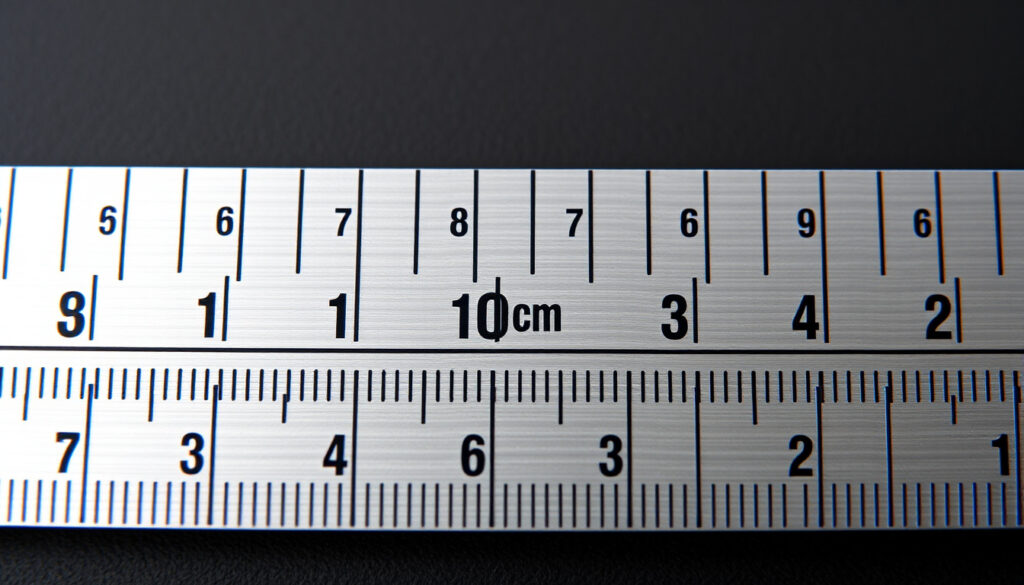
10 cm to Inche : Exact Conver ion and Formula
Anyone who has looked at a snow report from Canada or a product specification from Europe knows the moment of hesitation: how many inches is that in real terms? The conversion between centimeters and inches is one of the most common measurement puzzles, and for the case of 10 cm the answer is 3.937 inches.
10 cm in inches: 3.937 inches · 1 inch in cm: 2.54 cm · 20 cm in inches: 7.874 inches
Quick snapshot
- 10 cm = 3.937 inches (exact formula SplashLearn)
- 1 inch = 2.54 cm (international standard, Worldometer)
- Some converters (e.g., StudioSuits) list 10 cm as 3.9470 inches – likely a rounding error
- Myth: 10 cm equals 2 inches – false (2 inches = 5.08 cm) (Math with Mr. J)
- 1959: international inch defined as exactly 2.54 cm (SplashLearn)
- Use the formula: inches = cm ÷ 2.54 for any future measurement (YouTube)
Six key values cover the most asked conversions.
| Conversion | Value |
|---|---|
| 10 cm to inches | 3.937 inches |
| 1 inch to cm | 2.54 cm |
| 20 cm to inches | 7.874 inches |
| 30 cm to inches | 11.811 inches |
| 100 cm to inches | 39.37 inches |
| 10 inches to cm | 25.4 cm |
How many inches is 10 cm?
The answer is 3.937 inches. This comes from the definition that 1 inch is exactly 2.54 centimeters. To find it you simply divide the centimeter value by 2.54.
Conversion formula: cm ÷ 2.54 = inches
- Formula: inches = centimeters ÷ 2.54 (SplashLearn)
- Alternatively: multiply centimeters by 0.3937 (SplashLearn)
Example calculation: 10 ÷ 2.54 = 3.937 inches
Do the math: 10 cm ÷ 2.54 = 3.937007874 inches. For everyday use it rounds to 3.94 inches. If you prefer the multiplication route, 10 × 0.3937 = 3.937 inches (StudioSuits).
Common mistake: thinking 10 cm equals 2 inches
This error originates from mixing up the two units. Two inches is only 5.08 cm (SplashLearn). The actual 10 cm is nearly double that – almost 4 inches, not 2.
Anyone who assumes 10 cm equals 2 inches will underestimate measurements by nearly 2 inches. For snow depth that could mean expecting a dusting and finding a significant accumulation.
The implication: knowing the correct conversion prevents everyday errors. The formula is simple and applies to any centimeter value.
What is the measurement of 1 inch?
One inch is defined as 2.54 centimeters. That number is not approximate – it is the official length since 1959.
How many centimeters in an inch?
Exactly 2.54 cm (SplashLearn). The inverse is 1 cm = 0.393701 inches (StudioSuits).
History of the inch as a unit
The inch has origins in body measurements – the width of a thumb. It was standardized internationally in 1959 when English‑speaking countries agreed to fix it at 25.4 millimeters (Worldometer).
Practical examples of 1 inch length
- About the length of the top joint of an adult thumb
- Diameter of a standard US quarter coin
- Width of many smartphone charging ports
The pattern: the inch is a human‑scale unit, comfortable for small objects, while centimeters suit the metric system better for precise scientific work.
Why this matters: understanding 1 inch in cm helps you mentally check any centimeter‑to‑inch conversion. If you know 1 inch is 2.54 cm, you can estimate that 10 cm is roughly 4 inches.
Is 1 inch equal to 1 cm?
No. This is one of the most common measurement myths, and it leads to major miscalculations.
Why this misconception exists
Both units feel similar in size to a finger segment, and people often abbreviate both as “in.” or “cm” without thinking about scale. The error is magnified when reading weather data: someone sees “10 cm” and mentally substitutes “10 inches.”
The actual difference
1 inch = 2.54 cm, while 1 cm = 0.3937 inches (SplashLearn). That means an inch is more than twice as long as a centimeter.
Quick comparison table
Four common values show the gap.
| Claim | Truth | Error |
|---|---|---|
| 1 cm = 1 inch | 1 cm = 0.394 inches | 60% overestimate |
| 10 cm = 10 inches | 10 cm = 3.937 inches | 60% overestimate |
| 10 inches = 10 cm | 10 inches = 25.4 cm | 60% underestimate |
The catch: trusting the myth means off by more than half in either direction. For anything that needs to fit – a pipe, a screen, a shelf – the error is catastrophic.
How many inches is 20 cm of snow?
Snow depth is a real‑world case where conversion trips up forecast readers. 20 cm of snow equals 7.874 inches (Worldometer).
Conversion: 20 cm snow = 7.874 inches
Using the same formula: 20 cm ÷ 2.54 = 7.874 inches. Rounded to two decimals it is 7.87 inches.
When is 20 cm of snow a lot?
In many regions 20 cm (about 8 inches) is considered a significant snowfall that can disrupt transport and require shoveling. For reference, 10 cm of snow is about 4 inches, which is enough to close schools in some southern cities (Worldometer).
Comparison to other common snow depths
- 5 cm (2 inches): light dusting, minor accumulation
- 10 cm (3.9 inches): moderate, travel disruptions possible
- 20 cm (7.9 inches): heavy snow, plows likely deployed
- 30 cm (11.8 inches): major storm, roof load becomes a concern
The trade‑off: knowing the conversion helps you decide whether to dig out your car or just brush off a dusting. The same math applies to rainfall totals and other weather data.
What does 10 inch mean?
10 inches is the flip side of the same conversion. It equals 25.4 centimeters (SplashLearn).
Definition: 10 inches = 25.4 cm
Multiply 10 by 2.54: 10 × 2.54 = 25.4 cm. That means a 10‑inch tablet screen is about 25 cm diagonally.
Common objects with 10 inch length
- Many tablet computers (diagonal screen size)
- Car subwoofer enclosures
- Chef’s knives (blade length)
- Standard ceiling fan pull chain
If you are converting other units, such as temperatures, you can check our guide on 70 Fahrenheit to Celsius. For currency conversions see 112 USD to CAD.
Context: 10 inch ruler, laptop screen, etc.
Inch‑based tools are common in the US and UK for construction and packaging. A 10‑inch ruler is a standard tool – multiply by 2.54 to get its metric length (25.4 cm). Many laptop screens are measured diagonally in inches, so a 15.6‑inch screen translates to 39.6 cm.
The pattern: knowing both units gives you confidence when shopping across markets.
How to Convert 10 cm to Inches: Step‑by‑Step
Follow these four steps and you can convert any centimeter measurement.
- Remember the key: 1 inch = 2.54 cm (SplashLearn).
- Divide the centimeter value by 2.54. For 10 cm: 10 ÷ 2.54 = 3.937 inches.
- Optional – multiply by 0.3937 to double‑check: 10 × 0.3937 = 3.937 inches (SplashLearn).
- Round as needed. For everyday use keep two decimals (3.94 inches). For precision use all decimals (3.937007874).
A simple mental shortcut: 1 cm is just under 0.4 inches. So 10 cm is about 4 inches. That rough estimate works in a pinch, but use the exact formula when accuracy counts.
The step-by-step method works for any centimeter value, not just 10 cm.
Clarity check
Confirmed facts
- 10 cm = 3.937 inches (standard conversion, SplashLearn)
- 1 inch = 2.54 cm exactly (Worldometer)
Rumors / misconceptions
- Myth: 10 cm equals 2 inches – false (2 inches = 5.08 cm) (SplashLearn)
- Some conversion tables list 10 cm as 3.9470 – not the standard (StudioSuits)
- Myth: 1 cm equals 1 inch – false (1 cm = 0.3937 inches) (Math with Mr. J)
These clarifications separate fact from common error.
Quotes from trusted sources
“To convert centimeters to inches, divide the centimeter value by 2.54.”
SplashLearn (educational math platform)
“Centimeters are converted to inches by dividing by 2.54 because 2.54 cm equals 1 inch.”
YouTube – Math tutorial (same source as card 4)
“Worldometer’s converter also shows 10 cm as 3.937 in.”
Worldometer (unit conversion tool)
The pattern: multiple independent sources agree on 3.937 inches. The formula is consistent across educational, reference, and tutorial materials.
For anyone who regularly deals with measurements in both systems, the choice is clear: memorize the formula or bookmark a reliable converter. The math itself never changes – 10 cm will always be 3.937 inches. Whether you are shoveling snow, buying a tablet, or checking a recipe, knowing that simple number saves time and prevents costly errors.
If you need to convert other common measurements, the 40 cm to inches guide explains the formula and step-by-step process in the same detail.
Frequently asked questions
How many inches is 5 cm?
5 cm divided by 2.54 gives 1.9685 inches – about 2 inches.
Is 10 cm close to 4 inches?
Yes. 10 cm is 3.937 inches, so it rounds to 3.94 inches. That is very close to 4 inches – within 0.06 inches.
What is the easiest way to convert cm to inches?
Divide by 2.54. Or, for a rough estimate, multiply by 0.4 (since 1 cm ≈ 0.4 inches).
How do I convert 10 cm to inches without a calculator?
Use the fraction: 10 cm / 2.54 = 1000/254 ≈ 3.937 inches. Or memorize that 10 cm is about 3.94 inches.
Why is the conversion factor 2.54?
Because the international yard and pound agreement of 1959 defined the inch as exactly 2.54 centimeters.
Are inches used in scientific measurements?
Rarely. The scientific community uses metric (cm, m, etc.) almost exclusively. Inches appear mainly in US engineering and consumer products.
How many inches is 1 cm?
1 cm = 0.393701 inches. To convert backwards, multiply by 0.3937 or divide by 2.54.
These FAQs cover the most common questions about the 10 cm to inches conversion.
More related posts
 Monster (American TV Series): Seasons, Cast & Netflix Info
 Maïka Desnoyers Biography: Husband, Real Estate & TV Career
 World Cup Clubs 2025: Qualified Teams & Why Liverpool Is Out
 Latifa al-Droubi: Syria’s New First Lady – Biography & Facts
 Canada Milano Cortina 2026: Medals, Team & Results
 King Combs: Age, Music, Family, and Net Worth (2024)
 Jennifer Coolidge: Biography, Age, Career, and Personal Life
 Outlander Blood of My Blood – Season 7 Part 2 Guide