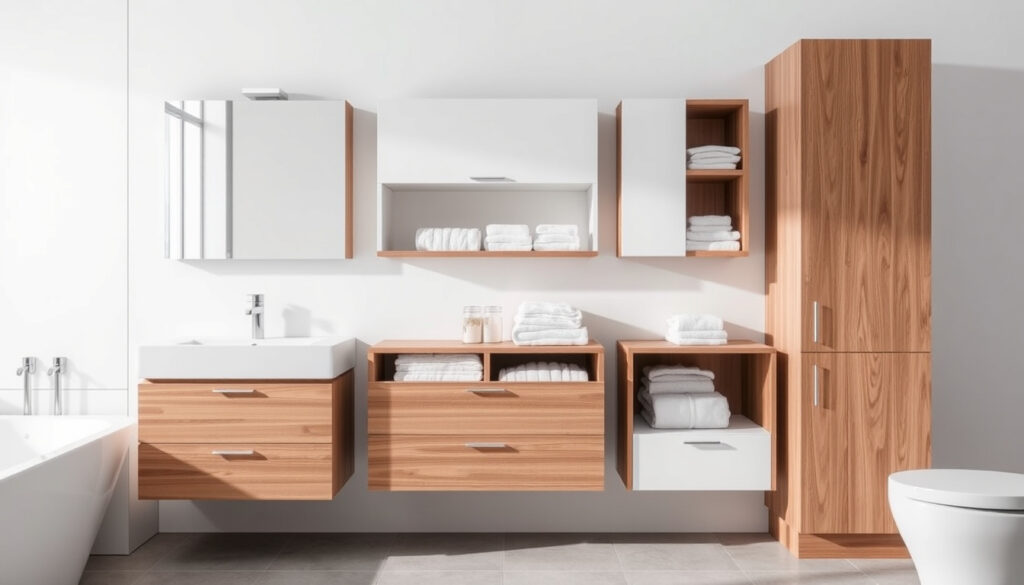
Bathroom Cabinets: Types, Materials & Buying Guide
Anyone who’s ever tried to find a toothbrush in a cluttered bathroom knows the feeling: you open the cabinet, and everything falls out. The right bathroom cabinet can turn that daily frustration into a calm, organised start to the day, and this guide walks through the main types—wall-mounted, freestanding, mirror, and sink units—and what to look for when buying in Ireland, from JYSK to Woodies to IKEA.
Common materials: MDF, plywood, solid wood ·
Standard width range: 24–36 inches ·
Popular types: Wall-mounted and freestanding
Quick snapshot
- Wall-mounted cabinets save floor space (Aosom (home storage retailer))
- Freestanding units offer more storage capacity (Monster Sales USA (bathroom specialist))
- Standard vanity depth is 21 inches (RTA Cabinet Store (kitchen & bath retailer))
- Exact lifespan of cabinets made from different materials
- Long-term performance of budget vs. premium brands
- No timeline data available for this topic
- Measure your space and choose a style before buying
Here’s a snapshot of key specifications to consider when shopping.
| Label | Value |
|---|---|
| Average price range | €100 – €800 |
| Most popular width | 60 cm (24 in) |
| Common materials | MDF, plywood, solid wood, glass |
| Warranty typical | 1–5 years |
| Standard depth | 21 inches (18 inches for compact spaces) |
| Mounting height (floating) | 30–36 inches from floor |
What are wall mounted bathroom cabinets?
Wall-mounted cabinets, also called floating vanities, attach directly to the wall with no legs touching the floor. They create a clean, airy, modern look while maximizing floor space, according to Laurysen Kitchens (kitchen and bath design firm). This makes them particularly beneficial in small bathrooms because they create a sense of openness and make floor cleaning easier, as noted by Aosom (home storage retailer).
“Wall-mounted cabinets save floor space and give a clean look.” — IKEA product description
Benefits of wall mounted cabinets
- Save floor space — ideal for compact bathrooms
- Easy to clean underneath — no legs or base to work around
- Available in a variety of sizes and finishes
Floating vanities are often mounted 30 to 36 inches from the floor depending on use case and sink type, according to RTA Cabinet Store.
Installation considerations
Wall-mounted cabinets require secure attachment to wall studs. The plumbing location can be a deciding factor in the overall width of a bathroom vanity, according to Lily Ann Cabinets (cabinet manufacturer). When buying a vanity with a top, the top should be at least 1 inch wider and 1 inch longer than the cabinet base.
Common sizes and styles
Bathroom vanity cabinets commonly range from 18 inches to 96 inches wide, according to RTA Cabinet Store. A 36-inch vanity is commonly used for a single sink, while a 60-inch vanity is standard for double vanities.
The implication: if floor space is tight, floating vanities deliver a smarter layout.
What are bathroom cabinets with mirror?
Mirror cabinets combine a storage unit with a mirror, making them a two-in-one solution for bathrooms where every inch counts. They are ideal for grooming because the mirror is right where you need it, and they often have internal shelves for toiletries.
Advantages of mirrored cabinets
- Combines storage and mirror in one unit
- Perfect for grooming — mirror at eye level
- Often have internal shelves for organisation
Types of mirror cabinets (surface, recessed)
Surface-mounted mirror cabinets attach directly to the wall and protrude into the room. Recessed models fit into a cavity between wall studs, creating a flush look. Recessed installation requires more work but saves space.
Integrated lighting options
Many modern mirror cabinets include built-in LED lighting around the mirror edges. This provides even, shadow-free illumination for shaving or makeup application.
For Irish bathrooms that often lack natural light, a mirror cabinet with integrated LED lighting can transform the usability of the space without needing extra electrical work.
The pattern: a lighted mirror cabinet solves two common bathroom pain points at once.
What is a bathroom cabinet sink?
A bathroom cabinet sink, also called a vanity unit, integrates the basin and storage into one piece. This creates a streamlined look and simplifies plumbing because everything is designed to fit together.
Difference between cabinet sink and vanity unit
The terms are often used interchangeably, but a cabinet sink typically refers to a smaller unit with a basin on top, while a vanity unit is a larger piece with a countertop and undermount or drop-in sink.
Plumbing requirements
Cabinet sinks require proper plumbing connections for the drain and water supply. The plumbing location can be a deciding factor in the overall width of a bathroom vanity, according to Lily Ann Cabinets.
Styles and materials
Cabinet sinks come in modern and traditional styles. Materials include MDF with a waterproof coating, plywood, and solid wood. Moisture resistance is a key factor for durability.
A cabinet sink gives you a neat, all-in-one solution, but it locks you into a specific basin size and style. If you later want a different sink, you may need to replace the entire unit.
What this means: consider future flexibility before committing to an integrated sink unit.
What are freestanding bathroom cabinets?
Freestanding bathroom cabinets sit on the floor and do not require wall mounting. They offer traditional charm and easier installation, according to Monster Sales USA (bathroom specialist).
“Floor standing cabinets offer more storage than wall-mounted.” — Big Bathroom Shop (bathroom retailer)
Pros and cons of freestanding
Upsides
- More storage capacity than wall-mounted
- No wall mounting needed — easier to install
- Easy to move or reposition
Downsides
- Takes up floor space
- Harder to clean underneath
- Can feel bulky in small bathrooms
Placement flexibility
Because they don’t need wall studs, freestanding cabinets can be placed anywhere there is floor space. This makes them a good option for rented homes where drilling into walls is not allowed.
Comparison with wall mounted
Floor standing cabinets offer more storage than wall-mounted, according to Big Bathroom Shop. However, wall-mounted units are better for small bathrooms where floor space is limited.
The catch: while they store more, they occupy valuable floor area that small rooms can’t spare.
How to choose the best bathroom cabinet?
Bathroom vanity shopping should begin with measuring the available width, depth, and height, including door clearances and plumbing locations, according to Houzz (home design platform).
Assessing your bathroom space
- Measure the wall or floor area where the cabinet will go.
- Note the location of plumbing, electrical outlets, and door swings.
- Determine the ideal cabinet depth — 21 inches is standard, 18 inches works for compact spaces.
- Check the mounting type: wall-mounted requires studs, freestanding does not.
- Set a budget and compare materials for moisture resistance.
A standard vanity depth is 21 inches, and 18-inch-depth vanities are common in compact spaces, according to RTA Cabinet Store. Powder rooms or very small bathrooms are often best served by smaller vanities in the 18 to 30 inch range.
Material considerations
Moisture resistance is a key factor for durability. MDF with a waterproof coating is common in budget models, while plywood and solid wood offer better longevity. Compare price and warranty when choosing between brands.
Budget and brand options (JYSK, Woodies, IKEA)
In Ireland, JYSK offers affordable flat-pack options, Woodies has a mid-range selection with local support, and IKEA provides modular systems with a wide range of sizes and finishes. Prices range from €100 for basic models to €800 for larger, solid-wood units.
Here’s a quick comparison to help you decide.
| Type | Installation | Storage | Best for |
|---|---|---|---|
| Wall-mounted | Requires wall studs | Moderate | Small bathrooms |
| Freestanding | No wall mounting | High | Large bathrooms |
| Mirror cabinet | Wall-mounted | Low to moderate | Grooming areas |
| Cabinet sink | Requires plumbing | Moderate | Modern bathrooms |
The pattern: wall-mounted suits tight spaces, while freestanding gives maximum storage.
Budget cabinets from flat-pack brands may look good initially but can warp or delaminate in humid bathrooms within a few years. For Irish bathrooms with limited ventilation, investing in a moisture-resistant plywood or solid wood cabinet is worth the extra cost.
Frequently asked questions
What is the best height for a bathroom cabinet?
Traditional vanity height is commonly 30 to 32 inches, while comfort height is 34 to 36 inches, according to RTA Cabinet Store. Floating vanities are often mounted 30 to 36 inches from the floor.
How to fix a wobbly bathroom cabinet?
Check that the cabinet is level and that wall-mounted units are secured into studs. For freestanding units, adjust the leveling feet or add shims under the base.
Can I install a bathroom cabinet myself?
Yes, many cabinets come with instructions. Wall-mounted units require drilling into studs and may need a helper. Freestanding units are easier for DIY installation.
How often should I replace bathroom cabinets?
With proper care, quality cabinets can last 10–15 years. Budget MDF cabinets may need replacement sooner if exposed to moisture.
Are bathroom cabinets with drawers better than shelves?
Drawers provide easier access to items at the back, while shelves are better for taller items. Many cabinets combine both.
What is the difference between a bathroom cabinet and a vanity?
A vanity typically includes a sink and countertop, while a cabinet is just storage. The terms are often used interchangeably in retail.
How to protect bathroom cabinets from moisture?
Use a dehumidifier or exhaust fan, wipe up spills promptly, and choose cabinets with waterproof coatings or solid wood construction.
For Irish buyers, the choice between wall-mounted and freestanding comes down to space and installation flexibility. The implication is clear: measure your bathroom, check your plumbing, and choose a moisture-resistant material that fits your budget. For anyone renovating a small Irish bathroom, the wall-mounted cabinet is the smartest investment. For larger family bathrooms, a freestanding unit with drawers will serve better in the long run.
More related posts
 How Many Kids Does Elon Musk Have? Full 2025 List
 Carrie Underwood: Apology, Family, Face Injury, and Miscarriages
 How Old Am I? Best Free Age Calculator by Date of Birth
 Austin Butler Relationships, Health, and Biography 2025
 When is the World Series 2025? Dates, Schedule & TV Times
 Roy Cohn: Lawyer, Trump Mentor, and McCarthy Aide
 Kelowna Homes for Sale – Buyer’s Market Guide 2025
 Marcus Ginny and Georgia – Lanz Double Homicide Conviction